Antebellum means before the war, and in American English it almost always refers to the period before the Civil War, roughly from the early 1800s until 1861.
The word comes from Latin: ante (before) and bellum (war). Historians use it to describe the social, political, and economic conditions in the United States, especially the South, in the decades leading up to the conflict.
You’ll also see it applied to architecture, homes, and fashion from that same time frame.
This guide breaks down the definition, the history behind it, common uses of the term today, and where people sometimes get it wrong.
What Does Antebellum Mean, Exactly?
The literal translation is before war. In practice, when Americans use the term without qualification, they mean the years before the Civil War, which started in 1861. Writers sometimes use antebellum for other conflicts too, like antebellum Europe before World War I, but the default meaning in the U.S. context points to the pre-Civil War South.
The word functions as an adjective. You’d say an antebellum home or antebellum politics, not the antebellum on its own. It modifies a noun to place that noun in a specific time and place.
The Historical Antebellum Period
Historians generally mark the antebellum era as starting after the War of 1812 and ending with the outbreak of the Civil War in 1861. During these decades, the country expanded westward, industrialized in the North, and deepened its reliance on slave labor in the South. Cotton became the dominant cash crop across Southern states, and the plantation economy grew alongside it.
This period also saw sharp regional divides take shape. The North moved toward factories, wage labor, and eventually stronger abolitionist movements. The South built its economy and social order around enslaved labor. Political fights over whether new states would allow slavery, including the Missouri Compromise and the Kansas-Nebraska Act, kept tensions rising throughout these years.
Understanding this backdrop matters because antebellum isn’t a neutral timestamp. It carries the weight of a slave-holding society, which is why the term shows up so often in discussions of race, memory, and how the South represents its own past.
Antebellum Architecture and the Antebellum Home
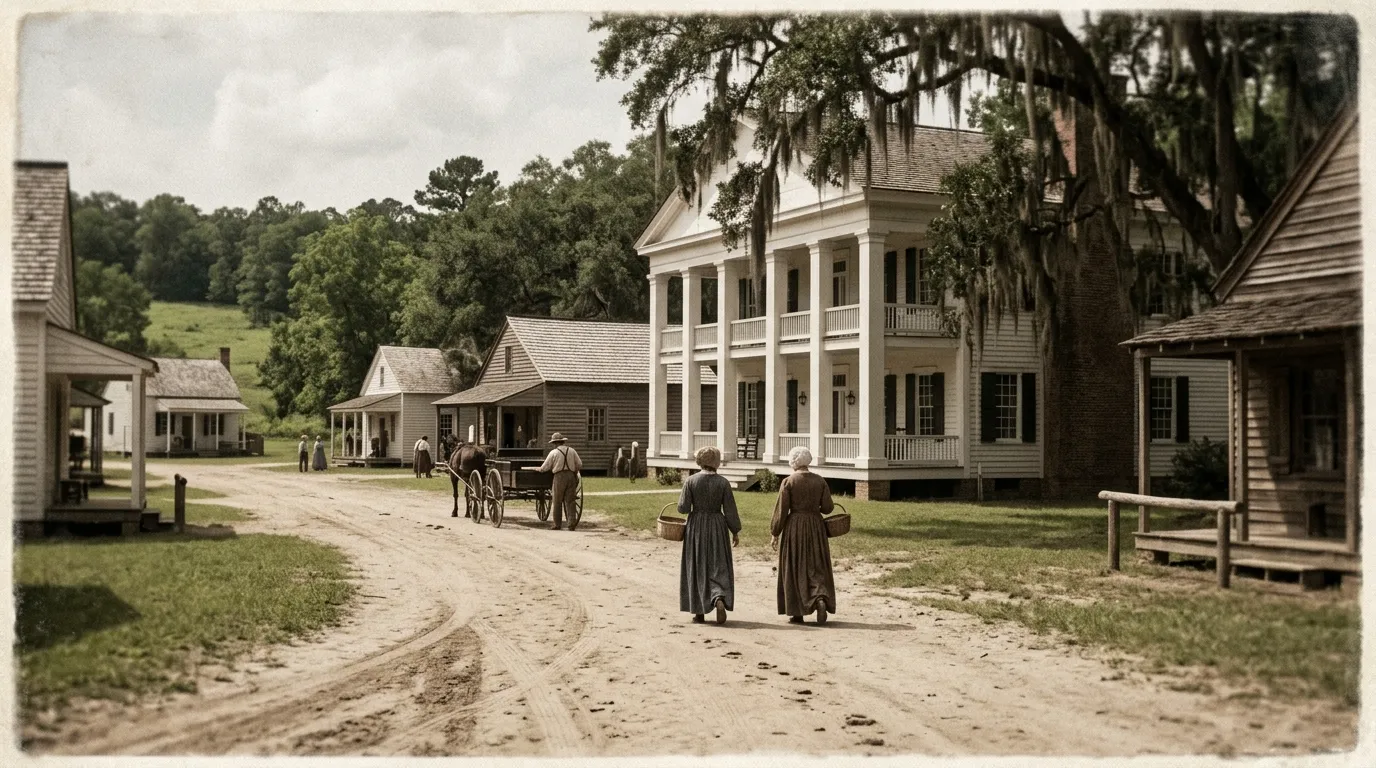
Outside of history classes, most people encounter the word through architecture. An antebellum home typically refers to a large Southern house built between roughly 1820 and 1860, often associated with plantations. These homes commonly feature:
- Tall columns across the front facade, often in Greek Revival style
- Wide, wraparound porches designed for the Southern climate
- Symmetrical layouts with a central hallway
- High ceilings to help with airflow and cooling
Cities like Natchez, Mississippi, and Charleston, South Carolina, still have clusters of these homes, and many are open for tours. It’s worth noting that the architectural beauty of these structures sits alongside their history as sites of forced labor. Many preservation groups and museums today try to present both the design history and the human cost together, rather than focusing on one and ignoring the other.
Antebellum vs. Postbellum vs. Reconstruction
People often mix up these related terms, so a quick comparison helps clarify how they connect.
Comparison Table: Antebellum vs. Related Terms
| Term | Meaning | Time Frame | Common Use |
| Antebellum | Before the war | Early 1800s to 1861 | History, architecture, culture |
| Postbellum | After the war | 1865 onward | Literature, economics, architecture |
| Reconstruction | Rebuilding period after the Civil War | 1865–1877 | Political and social history |
| Civil War era | The war itself | 1861–1865 | Military and political history |
Postbellum is the direct opposite of antebellum. If antebellum architecture uses grand columns and plantation-style layouts, postbellum architecture often reflects the economic strain of the rebuilding years, with simpler, more modest designs in many parts of the South.
Why the Word Carries Extra Weight
Because the antebellum South was built on slavery, the term rarely appears in a purely neutral, technical sense. When someone references antebellum values or antebellum charm, that phrasing can gloss over the reality of enslaved people’s lives during that era. Responsible writing on this topic usually names slavery directly rather than relying on softer, indirect language. If you’re writing about antebellum history, architecture, or culture, it helps to be specific about what the period actually involved for the people living through it, not just the wealthy landowners.
This doesn’t mean the word is off-limits. It’s a standard historical term used in textbooks, museums, and academic writing. The key is using it accurately and pairing it with honest context rather than nostalgia.
How the Word Is Used Today
Modern usage falls into a few common buckets:
- Academic and historical writing: describing the political, economic, or social conditions before 1861.
- Real estate and architecture: labeling homes and buildings from that construction period.
- Fashion: occasionally used to describe hoop skirts, corsets, and other clothing styles from the era, especially around themed events.
- General cultural references: sometimes used loosely to mean old-fashioned or from a bygone era, though this usage strays from the precise historical meaning.
If you’re writing for an audience that expects precision, such as a history paper or a real estate listing, stick to the standard definition tied to the pre-Civil War period.
Quick-Reference Table: Antebellum Meaning at a Glance
| Aspect | Detail |
| Word origin | Latin: ante (before) + bellum (war) |
| Standard meaning | Before the American Civil War |
| Typical date range | Early 1800s to 1861 |
| Part of speech | Adjective |
| Common pairings | Antebellum South, antebellum home, antebellum era |
| Opposite term | Postbellum |
| Key historical context | Slavery, plantation economy, regional political conflict |
FAQs
Q: Lady Antebellum meaning
A: Lady Antebellum refers to the former name of the country music group now known as Lady A.
Q: Antebellum meaning
A: Antebellum means “before the war,” often referring to the period before the American Civil War.
Q: Antebellum meaning in law
A: In law, antebellum generally describes something connected to the period before a particular war.
Q: Antebellum meaning slavery
A: In discussions of slavery, antebellum usually refers to the American period before the Civil War when slavery was legal.
Q: Antebellum meaning in history
A: In history, antebellum commonly describes the United States period before the Civil War.
Q: Antebellum meaning slang
A: Antebellum is not commonly used as slang and usually keeps its historical meaning of “before the war.”
Q: Post Antebellum meaning
A: Post-antebellum refers to the period after the antebellum era, especially after the Civil War.
Q: Antebellum movie
A: Antebellum is a 2020 horror-thriller film that explores themes of slavery, racism, and historical trauma.
Q: Antebellum South meaning
A: The Antebellum South refers to the Southern United States before the Civil War, especially the period when slavery was widespread.
Conclusion
Antebellum simply means before the war, and in American history that almost always points to the decades leading up to the Civil War in 1861.
The term shows up in history books, architecture tours, and casual conversation, but it always carries the context of a slave-based economy in the South. If you’re researching this period, look past the surface definition and dig into what daily life actually looked like for both enslaved people and landowners during those years.
For a deeper dive, check out [a guide to Civil War-era history] or explore [antebellum architecture styles] to see how the term applies beyond the history books. You can also review firsthand accounts and records through resources like the [Library of Congress digital collections] for primary source material on the period.

Hello, I’m Mark Nichol. I’ve always been passionate about English words and how they are used in everyday communication. At Defineexa.com, I share simple guides on word meanings, acronyms, texting abbreviations, and modern slang. I believe learning English should be easy, practical, and enjoyable, so every article is written with clarity and accuracy in mind.