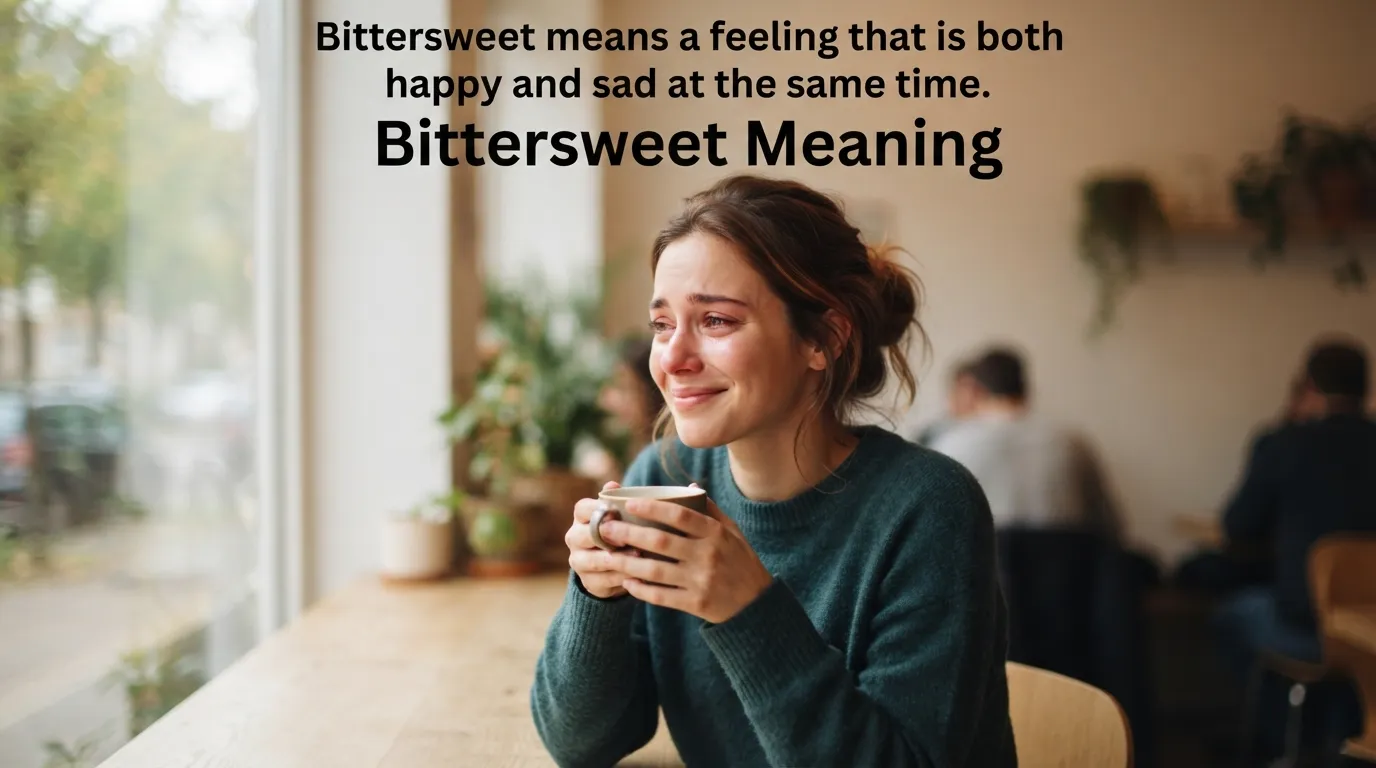
Bittersweet means happy and sad at the same time. It describes a moment, a feeling, or a memory that brings pleasure and pain together in one breath: joy with a sting, sweetness with a shadow. Your last day at a beloved school is bittersweet. Watching your child ride away on a first bike is bittersweet. The word is built from two tastes, bitter and sweet, and it works exactly like that on the tongue and in the heart. In this guide, you will learn what bittersweet really means, see it in real life moments, and know exactly when to use it.
Key Takeaways
- Bittersweet means pleasure mixed with pain, or joy touched by sadness.
- It is the perfect word for endings that are happy and hard at once.
- The word joins bitter and sweet, two tastes blended in one bite.
- Bittersweet is usually gentle, not tragic. It lives in tender, growing moments.
- It can also describe a taste and even a vine plant, but feelings come first.
What Does Bittersweet Mean in Simple Words?
In simple words, bittersweet is the feeling you get when two opposite feelings show up together. You are happy, and at the same time, a little sad. Neither feeling wins. They share the same moment, and that mixture is the whole beauty of the word.
Dictionaries say it plainly. The main meaning is pleasure accompanied by suffering or regret. Pleasure is the sweet part. The suffering or regret is the bitter part. Put together, you get a feeling that makes you smile and ache in the same second.
Think of taste, because the word borrows from the tongue. Dark chocolate is bittersweet: sweet on the first bite, bitter at the back of it. A bittersweet moment works the same way. The first feeling is joy, and right behind it walks a soft wave of loss.
Here is the key point many people miss: bittersweet is not a bad feeling. It often arrives at the best moments of life, the turning points. It shows up when something good is ending, something precious is changing, or someone you love is growing. It is the heart holding two true things at once.
Our guide on nostalgia meaning covers the closest feeling in the family, if you want to keep exploring.
What Does a Bittersweet Moment Feel Like?
Words like this are learned best through real life, so let us walk through the moments everyone knows.
Graduation day.
You did it. The degree is real, your friends are cheering, and your future is wide open. And then it hits you: this exact group, in this exact place, will never gather the same way again. Pride and a lump in the throat, side by side. That is bittersweet.
The last day in a childhood home.
The boxes are packed. You are excited for the new place, yet you touch the door frame where your height was marked as a kid. Happiness about what comes next, sadness about what stays behind. Bittersweet.
Watching your child grow.
A first step is pure joy. A first day of school, even more. But every new step means a smaller hand needs you a little less. Parents live inside this feeling. Joy in front, tenderness behind. Bittersweet.
A friend moving away.
You are thrilled about their new job and new city. You are also standing at the airport knowing weekly coffees just ended. The hug is warm and wet at the same time. Bittersweet.
The final episode of a beloved show.
The ending is beautiful, the story lands perfectly, and you are genuinely happy. And yet closing that last episode feels like saying goodbye to friends. Satisfaction and loss, holding hands. Bittersweet.
Notice the pattern. Bittersweet lives at turning points: ends of eras, growth, goodbyes inside good news. If a moment makes you say, I am so happy, and it hurts a little, you have found the word.
Bittersweet vs Sad: What Is the Difference?
People sometimes use bittersweet as a polite way to say sad, and that misses its heart. The difference matters, so here is a clean table:
| Word | Core Feeling | Sweet Part? | When It Fits |
| Bittersweet | Happy and sad together | Yes, always | Graduation, farewells, watching kids grow |
| Sad | Sorrow only | No | Loss, grief, disappointment |
| Nostalgic | Warm longing for the past | Mostly sweet | Old photos, childhood songs, hometowns |
| Melancholy | Soft, quiet sadness | Barely | Rainy days, reflective moods, gentle sorrow |
| Poignant | Deeply moving, sharp and tender | Mixed | A touching speech, a final letter |
The test is simple. If there is real joy inside the feeling, it may be bittersweet. If the joy is gone and only sorrow is left, plain sad is the honest word. Bittersweet always keeps its sweet half alive, even if that half is small.
And compared with nostalgic: nostalgia looks backward with warmth, mostly sweet. Bittersweet can happen right now, in the present moment, as the change is unfolding in front of you.
Is Bittersweet a Positive or Negative Feeling?
The honest answer is: it is both, and that is exactly why English keeps it. Life rarely hands us feelings in single flavors, so the language grew a word for the blend.
Most people experience bittersweet as deep rather than bad. It can even be healthy. Feeling joy and sadness together teaches us that good things matter precisely because they do not last forever. The sadness honors what was precious. The joy honors what comes next.
Think of the last scene of a perfect holiday. The sadness of leaving proves the days were golden. If you felt nothing at goodbye, the trip would not have mattered much. Bittersweet is the receipt that says: this counted. This was real.
So do not fear the word or the feeling. When life feels bittersweet, it usually means you loved something well. The ache is the price tag of meaning, and most of us pay it gladly.
If you want the softer cousin of this mood, our explainer on melancholy meaning is a gentle next read.
How to Use Bittersweet in a Sentence
The word is an adjective, so it sits before nouns like moment, feeling, ending, and day, or after verbs like was and felt. Here are natural examples:
Everyday examples:
Graduation was a bittersweet day for the whole class.
Saying goodbye at the airport felt bittersweet.
It was a bittersweet moment when her daughter left for college.
The movie has a bittersweet ending that stays with you.
Quick meanings in texts:
- bittersweet news → good news with a sad edge, like a promotion that means moving away
- a bittersweet goodbye → a warm farewell that also hurts
- a bittersweet memory → a memory that makes you smile and tear up together
- a bittersweet victory → a win shadowed by a cost, an injury, or a farewell
Notice how bittersweet loves partners like moment, ending, feeling, and goodbye. Pair it with turning points and changes, and it will almost always sound natural.
In texting and captions, people use it to name big life posts with honesty. Last day at the office, so bittersweet. Under a childhood home photo: bittersweet. Short, tender, and everyone understands at once.
The Other Meanings of Bittersweet

Feelings own this word today, but it began with taste, and it still keeps two other lives worth knowing.
The taste.
Bittersweet can describe a flavor that is both bitter and sweet, like dark chocolate or some coffees. When a food label or a chef uses it, this taste meaning is the one at work.
The plant.
Bittersweet is also the name of certain climbing vines. One is a Eurasian vine with purple flowers and red berries. The other is a North American vine with orange and scarlet fruit that people use in autumn wreaths. Gardeners and nature writers use the word this way, and the berries of these plants are not food for people, so admire them and leave them be.
Context always tells you which life of the word is speaking. A poem about a farewell means the feeling. A recipe means the taste. A garden guide means the vine.
Frequently Asked Questions
What does bittersweet mean?
Bittersweet means happy and sad at the same time: pleasure mixed with pain, or joy touched by regret. It describes moments like graduations, farewells, and watching children grow.
Is bittersweet a happy or sad feeling?
It is both at once, which is the whole point of the word. There is real joy in it and real sadness in it, sharing one moment. Most people find it tender and deep rather than purely negative.
What is an example of a bittersweet moment?
Graduation is the classic example. You feel proud and happy about finishing, and sad that a beloved chapter and daily life with friends is ending, all on the same day.
What is the difference between bittersweet and nostalgic?
Nostalgic is a warm longing for the past, mostly sweet. Bittersweet is joy and sadness mixed right now, often at a turning point. Nostalgia looks back; bittersweet stands in the doorway between then and next.
How do you use bittersweet in a sentence?
Place it before words like moment, ending, feeling, or day. For example: The last day of summer camp was bittersweet, or, Their farewell dinner felt bittersweet.
What does bittersweet mean in a text or caption?
In texts and posts, bittersweet names a big change with mixed feelings, like a last day at work, a move, or a child milestone. It tells readers: I am happy, and this also hurts a little.
Conclusion
Bittersweet means happy and sad at the same time, joy with a gentle ache inside it. It is the word for graduations, farewells, growing children, and every doorway moment where one good chapter closes and another opens.
Now the word is yours. The next time a moment makes you smile and tear up in the same breath, you will have the perfect name for it, and it will feel a little less confusing and a little more human.

Hello, I’m Mark Nichol. I’ve always been passionate about English words and how they are used in everyday communication. At Defineexa.com, I share simple guides on word meanings, acronyms, texting abbreviations, and modern slang. I believe learning English should be easy, practical, and enjoyable, so every article is written with clarity and accuracy in mind.