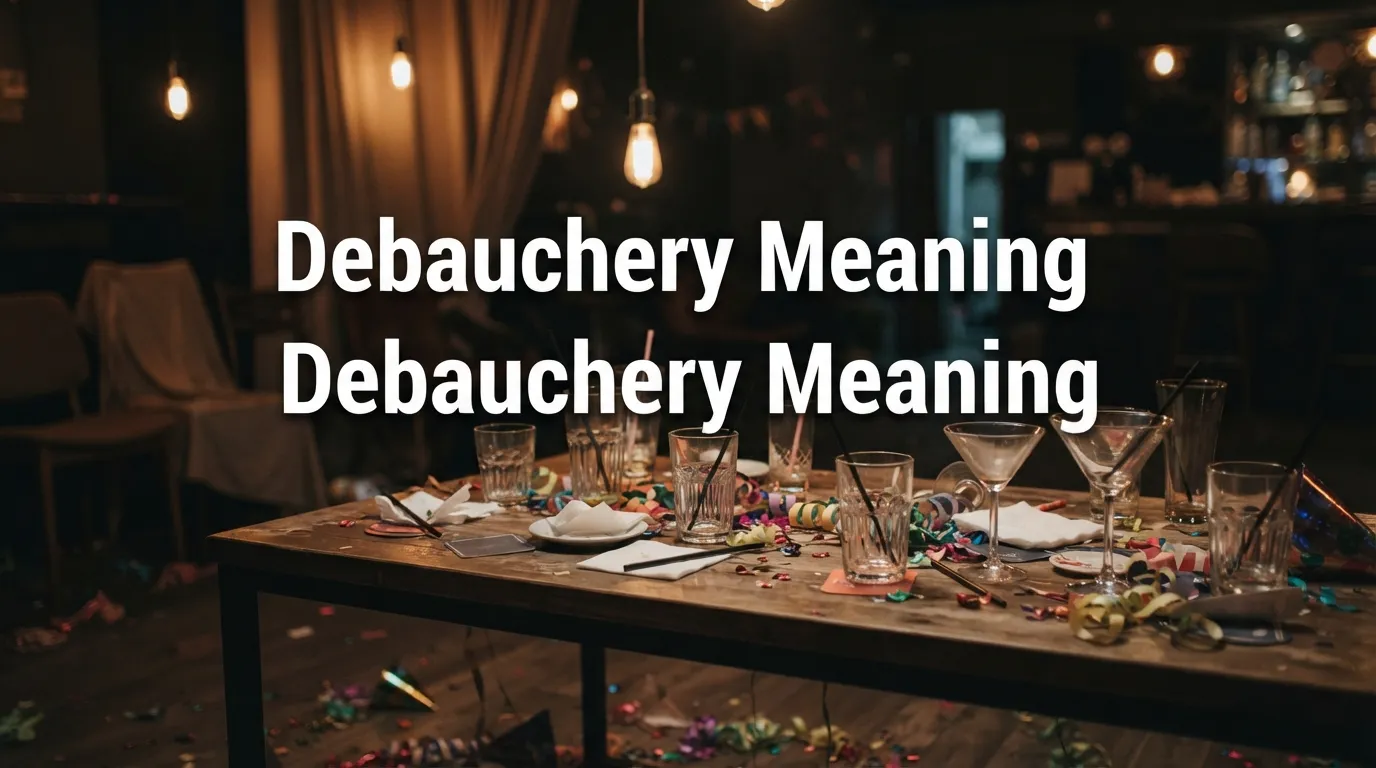
Debauchery means wild, excessive, or immoral behavior, often linked to sex, drinking, parties, or other forms of pleasure.
It is a strong word with a negative tone.
It suggests that a person has gone too far and is not showing much self-control.
The word can also describe a way of life built around excess.
What Does Debauchery Mean?
Debauchery means extreme or uncontrolled behavior that is focused on pleasure.
The word is often used for acts that people see as wrong, wild, or beyond normal limits. It may relate to sex, alcohol, parties, or other forms of excess.
For example:
- He left his old life of debauchery.
- The book tells a story of wealth and debauchery.
- The party turned into a night of drinking and debauchery.
The word does more than describe fun. It also shows disapproval.
If someone says, “They had fun,” the sentence sounds neutral.
If someone says, “They lived in debauchery,” it sounds like they think the people lived in a wild or immoral way.
Debauchery Meaning in Simple English
In very simple English, debauchery means going too far in the search for pleasure.
It can include:
- Too much drinking
- Wild parties
- Excessive sexual behavior
- Reckless acts
- A life with very little self-control
But not every fun activity is debauchery.
Going to dinner with friends is not debauchery.
Having a drink is not always debauchery.
Going to a party is not always debauchery.
The word is used when the behavior is seen as too extreme, wild, or immoral.
A simple way to remember it is:
Debauchery = too much pleasure with too little restraint.
Is Debauchery Always About Sex?
No, it is not always about sex.
Sexual behavior is one common use of the word. But debauchery can also mean heavy drinking, wild parties, or other forms of extreme pleasure.
The sentence can help you understand the exact meaning.
For example:
“The story is about sexual debauchery.”
Here, the meaning is clearly linked to sex.
But:
“He lived a life of debauchery.”
This can mean much more. It may include drinking, sex, parties, spending, and other wild behavior.
So, it is better not to think of debauchery as a word that only means sexual behavior.
Its main idea is excess and lack of control.
Why Is Debauchery a Negative Word?
Debauchery is almost always used in a negative way.
When a person uses this word, they often think the behavior is wrong, harmful, or too extreme.
Look at the difference:
“They enjoyed a late-night party.”
This does not tell us that the party was bad.
“They spent the night in debauchery.”
This gives a very different feeling. It suggests wild or immoral behavior.
This is why you should use the word with care. It can sound like a strong judgment about a person or group.
It is not a simple word for “fun.”
Debauchery Examples in Sentences
These examples show how people may use the word:
- He wanted to leave his life of debauchery behind.
- The novel tells of wealth, power, and debauchery.
- The ruler was known for his wild life and debauchery.
- The story shows a world filled with luxury and debauchery.
- Years of drinking and debauchery changed his life.
- The writer described the party as an evening of debauchery.
- The character slowly fell into a life of debauchery.
- The old tale warns against greed and debauchery.
Each example gives the word a strong sense of excess.
What Does “A Life of Debauchery” Mean?
“A life of debauchery” means a way of living that is full of wild and excessive pleasure.
It often means more than one bad choice. It suggests a pattern that continues over time.
A person described this way may spend much of their time:
- Drinking heavily
- Going to wild parties
- Seeking sexual pleasure
- Chasing other forms of excess
For example:
“After years of debauchery, he chose a quiet life.”
This tells us that the person changed from a wild way of living to a more calm and controlled one.
The phrase is often seen in books, stories, history, and moral writing.
Debauchery vs. Indulgence
Debauchery and indulgence are close in meaning, but they are not the same.
Indulgence means allowing yourself something you enjoy, often more than you need.
For example:
“The cake was a small indulgence.”
This does not sound bad.
Debauchery is much stronger.
It suggests extreme pleasure, poor self-control, or behavior that is seen as wrong.
Think of it this way:
Indulgence: “I gave myself a treat.”
Debauchery: “I went far beyond normal limits.”
So, an indulgence can be harmless. Debauchery usually has a much more negative tone.
Debauchery vs. Excess
Excess means having or doing too much.
It is a very broad word.
For example, you can have:
- An excess of food
- An excess of money
- An excess of work
- An excess of noise
Debauchery is more focused.
It often deals with pleasure, wild behavior, and a lack of restraint.
For example, eating too much food may be called excess.
A lifestyle built around heavy drinking, wild parties, and other extreme acts may be called debauchery.
So, excess is a wider term, while debauchery has a stronger link to wild or immoral pleasure.
Debauchery vs. Hedonism
These two words are also easy to mix up.
Hedonism is the idea that pleasure is very important in life.
The word can be used in a calm or academic way. It does not always say that a person is doing something wrong.
Debauchery is different.
It normally describes pleasure that has become extreme or morally troubling.
For example:
Hedonism: Pleasure is seen as a major goal.
Debauchery: Pleasure is chased in an excessive or reckless way.
So, the words can be related, but they are not exact matches.
Is Debauchery the Same as Reckless Behavior?
Not quite.
Reckless behavior means doing something without enough care about the result.
For example, driving very fast without caring about safety can be reckless.
Debauchery is more about excessive pleasure and behavior that is seen as immoral or uncontrolled.
A person can act recklessly without taking part in debauchery.
A person may also live a life of debauchery that includes many reckless acts.
The two ideas can overlap, but they are not the same.
How Is Debauchery Used in Everyday English?
Debauchery is not a very common casual word.
You may see it more often in:
- Books
- News writing
- History
- Essays
- Religious writing
- Stories
- Serious talks about behavior
In daily speech, people may use simpler phrases such as:
- Wild behavior
- Heavy partying
- Reckless living
- Going too far
A writer may choose debauchery because it gives the sentence a strong and serious tone.
For example:
“The novel shows a life of luxury and debauchery.”
This sounds more serious than:
“The novel shows a life of parties and fun.”
What Is the Opposite of Debauchery?
There is no one perfect opposite of debauchery.
But words such as restraint, moderation, discipline, and self-control can express the opposite idea.
For example:
Debauchery: little control over pleasure.
Moderation: knowing when enough is enough.
Self-control: being able to control your actions.
Restraint: holding yourself back from excess.
The best opposite depends on the sentence.
What Is the Adjective Form of Debauchery?
The related adjective is debauched.
If someone is called debauched, it means they are seen as morally corrupt or deeply involved in wild and excessive behavior.
For example:
“The story follows a debauched ruler.”
This means the ruler is shown as someone who lives in a very wild or immoral way.
Another related word is debauch.
As a verb, debauch can mean to corrupt someone or lead someone away from proper behavior.
So:
- Debauchery = the noun
- Debauched = the adjective
- Debauch = the verb
Common Phrases With Debauchery
You may see the word in a few common phrases.
Life of debauchery
A lifestyle filled with wild and excessive pleasure.
Sexual debauchery
Sexual behavior that is seen as excessive or immoral.
Drunken debauchery
Wild behavior linked to heavy drinking.
Scenes of debauchery
Scenes that show extreme or immoral behavior.
Luxury and debauchery
A phrase used to describe a life of wealth and excess.
These phrases are more common in formal writing than in normal daily talk.
Is Debauchery a Formal Word?
Yes. Debauchery sounds more formal than many simple words for wild behavior.
You are more likely to see it in writing than hear it in a short, casual chat.
For example, a friend may say:
“That party was wild.”
A writer may say:
“The party became an evening of debauchery.”
Both sentences describe a wild event, but the second one sounds much more serious and judgmental.
This makes debauchery useful in stories, essays, and descriptions of a person’s lifestyle.
Common Mistake: Calling Any Party Debauchery
One common mistake is thinking that every party or fun activity is debauchery.
That is not true.
A normal party is not automatically debauchery.
A night out with friends is not automatically debauchery.
Enjoying a nice meal is not debauchery.
The word needs a stronger sense of excess, wild behavior, or moral concern.
Context is very important.
If someone uses the word for a normal activity, they may be using it in an exaggerated or joking way.
Can Debauchery Describe One Event?
Yes.
Although the word often describes a lifestyle, it can also describe one event.
For example:
“The party ended in debauchery.”
Here, the word points to what happened during that event.
It does not always mean that the people involved live this way every day.
Still, the behavior must fit the strong meaning of the word.
A simple dinner would not normally be called debauchery.
Debauchery in Books and Stories
Writers often use debauchery to show a person’s fall from a better life.
A story may begin with a person who has money, power, or fame. The person then starts chasing pleasure without limits.
Over time, the character may lose friends, money, trust, or respect.
The word can help show this change in a short way.
For example:
“His wealth led him into a life of debauchery.”
The sentence suggests that wealth gave him many chances to chase pleasure, and he used them in a harmful or excessive way.
Quick Comparison of Similar Words
| Word | Simple meaning | Tone |
| Debauchery | Wild and excessive pleasure-seeking | Strongly negative |
| Indulgence | Giving yourself a treat | Mild |
| Excess | Too much of something | Neutral or negative |
| Hedonism | Making pleasure very important | Neutral or negative |
| Recklessness | Acting without enough care | Negative |
| Restraint | Keeping yourself under control | Positive |
This shows why these words should not always be used in the same way.
Quick Answer: Debauchery Meaning
If you need the meaning in one line:
Debauchery means extreme or uncontrolled behavior, often linked to sex, drinking, partying, or other forms of pleasure.
It is usually a negative word.
It suggests that someone has gone beyond normal limits and is not showing enough self-control.
FAQs
Debauchery meaning in farsi
In Farsi, debauchery means عیاشی or هرزگی, referring to excessive indulgence in sensual pleasures or immoral living.
Debauchery meaning in the Bible
In the Bible, debauchery means unrestrained indulgence in lust, drunkenness, and sensual sins that lead away from a godly life.
Debauchery meaning synonyms
Common synonyms for debauchery include dissipation, licentiousness, depravity, excess, profligacy, and revelry.
Debauchery meaning slang
In slang, debauchery often humorously describes wild partying, heavy drinking, or over-the-top indulgence in pleasures.
Debauchery meaning in a sentence
He regretted the years of wild parties and excess that filled his youth with debauchery.
Debauchery meaning in russian
In Russian, debauchery translates to разврат or распутство, meaning extreme moral looseness or wild sensual excess.
Debauchery meaning for kids
Debauchery means going way too far with fun things like parties or treats in a way that is unhealthy or not good.
Debauchery meaning in Chinese
In Chinese, debauchery means 放荡 (fàngdàng) or 淫逸 (yínyì), referring to a life of excessive sensual pleasure and moral looseness.
Conclusion
Debauchery means excessive, wild, or immoral behavior, often linked to pleasure. It may involve sex, drinking, parties, or other forms of excess.
The most important point is that debauchery is much stronger than simply having fun. It suggests that someone has gone too far or has lost control.
So, when you see the word in a book, article, or conversation, look at the context. It will usually point to excessive pleasure, wild behavior, and a strong sense of disapproval.
Discover More Post
- Diligent Meaning: Simple Definition, Examples & Synonyms
- Spontaneous Meaning: Definition, Examples & Easy Explanation
- Hiatus Meaning Explained: Easy Definition You’ll Remember
- TS Meaning: All Common Meanings and How to Use It

Hello, I’m Mark Nichol. I’ve always been passionate about English words and how they are used in everyday communication. At Defineexa.com, I share simple guides on word meanings, acronyms, texting abbreviations, and modern slang. I believe learning English should be easy, practical, and enjoyable, so every article is written with clarity and accuracy in mind.