
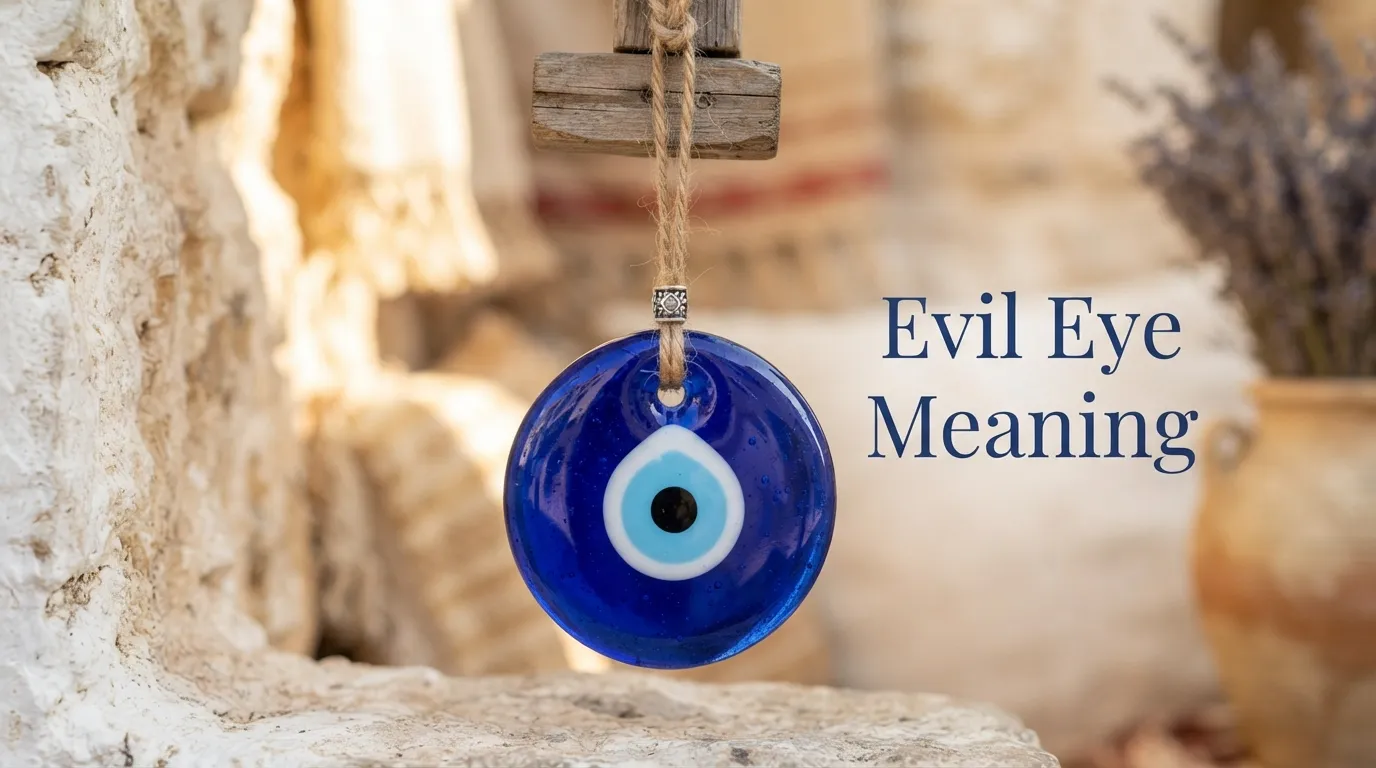
The evil eye is an old belief about envy and harm.
It says that a jealous look can bring bad luck or trouble.
The belief exists in many cultures.
Today, the evil eye symbol is also seen as a sign of protection, luck, and safety.
What Is the Evil Eye?
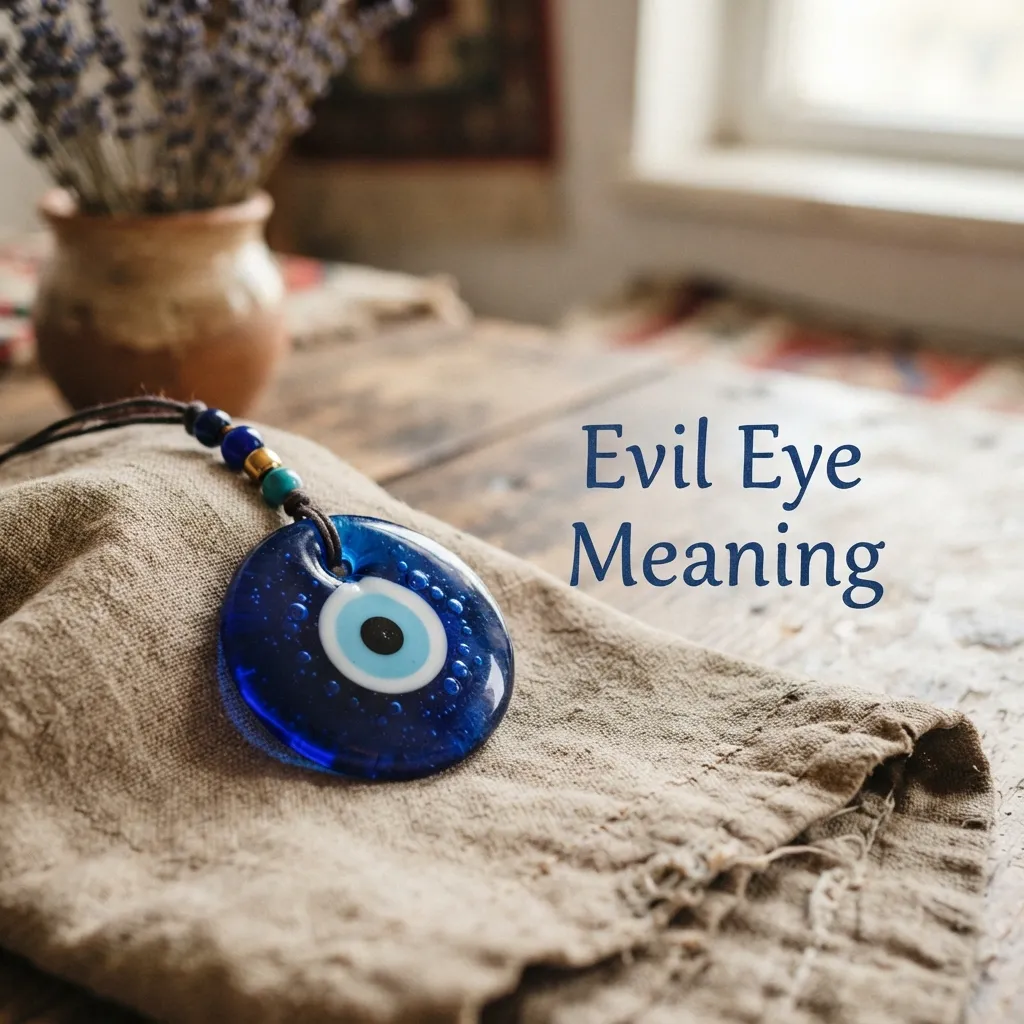
The evil eye is a belief linked to jealousy and envy. Some people believe that a person can cause harm by looking at someone with envy or bad intent.
This belief is very old. It is found in many parts of the world. It is not tied to just one country or faith.
The term can also mean the eye-shaped charm used for protection. This is why you may see the symbol on bracelets, necklaces, homes, and cars.
The meaning can be different for each person.
Some people see it as a spiritual symbol. Others see it as part of their culture. Some people wear it simply because they like the design.
For example:
- A person may wear an evil eye bracelet for protection.
- A family may place the symbol in their home.
- Someone may wear it as a cultural symbol.
So, the evil eye can mean both harmful envy and protection from that harm.
What Does the Evil Eye Symbol Mean?
The evil eye symbol is usually shaped like an eye. It often has several circles around the center.
Blue is one of the most common colors. White, black, and other colors may also appear.
The symbol is often linked with:
- Protection
- Safety
- Good luck
- Peace
- Defense from envy
For many people, the symbol is a reminder to stay safe from bad intentions.
It does not have the same meaning for everyone. Its meaning can change based on culture and personal belief.
For example, one person may see it as a spiritual charm. Another may see it as a family tradition. Someone else may simply see it as beautiful jewelry.
Where Did the Evil Eye Come From?
The evil eye has a very old history.
There is no single place that can be called its only origin. Similar beliefs appeared in several old cultures.
Ancient people in the Mediterranean world wrote about harmful looks. Similar beliefs also grew in parts of the Middle East and North Africa.
Over time, these ideas spread through travel and trade.
Different cultures then created their own customs. Some used charms. Others used prayers or other forms of protection.
This is why evil eye traditions can look different from one place to another.
For example:
- Some people use an eye-shaped charm.
- Some people use prayer for protection.
- Some families follow old customs after receiving praise.
The details may change, but the main idea often involves envy and protection.
What Does a Blue Evil Eye Mean?
The blue evil eye is one of the best-known versions of the symbol.
Blue is strongly linked with evil eye charms in many Mediterranean traditions. It is especially common in Turkish-style designs.
Today, many people see the blue eye as a sign of protection and good luck.
But blue does not have one fixed meaning everywhere.
Its meaning can depend on the culture and the person using it.
For example:
- Someone may wear a blue eye bracelet.
- A family may hang a blue eye near a door.
- A person may give one as a good-luck gift.
The blue color is often linked with the traditional design. The meaning comes from the wider belief behind the symbol.
What Does an Evil Eye Bracelet Mean?
An evil eye bracelet is often worn as a protective symbol.
Some people believe it can guard them from envy or bad energy. Others wear it because it has cultural or personal meaning.
There is no scientific proof that a bracelet can stop supernatural harm. Its meaning is based on belief, tradition, and symbolism.
For many people, the bracelet still has value.
It may remind them of family, culture, faith, or personal strength.
For example:
- A friend may give you one before a trip.
- A parent may give one to a child.
- Someone may wear one as a daily reminder of protection.
The bracelet can be meaningful even when a person does not take the belief literally.
What Does It Mean When Someone Gives You an Evil Eye?
An evil eye charm is often given as a good-will gift.
The person may want to wish you safety, luck, or protection.
The meaning can be even more special when the gift is given during a major life event.
Someone may give the charm before a trip, move, new job, or other big change.
For example:
- A friend may give you one before you travel.
- A family member may give one after a big life event.
- Someone may give one simply to wish you well.
So, receiving an evil eye charm does not usually mean something bad. In many cases, the gift carries a positive intention.
Is the Evil Eye a Religious Symbol?
The evil eye is connected with many cultures and some religious traditions. But it does not belong to just one religion.
People understand it in different ways.
Some people connect it with faith. Others see it as folklore or culture. Some use the symbol only as decoration.
This is an important difference.
You cannot know a person’s beliefs just because they wear an evil eye necklace.
For example:
- Someone may wear it because of family tradition.
- Someone may use it as a home decoration.
- Someone may believe it offers spiritual protection.
The symbol has a much wider history than one religion alone.
Evil Eye Meaning in Different Cultures
The evil eye appears in many cultures around the world.
The details are not always the same. Each culture may have its own beliefs and ways of dealing with envy.
The idea is well known in parts of the Mediterranean, Middle East, North Africa, and South Asia.
In South Asia, the word nazar is often used for a harmful or jealous gaze.
These traditions may share similar ideas. Still, they should not be treated as exactly the same.
Culture can change the way people understand the belief.
For example:
- A Turkish charm may be used for protection.
- A South Asian family may talk about nazar.
- A Mediterranean tradition may connect the evil eye with envy.
The common idea is often a fear of harm caused by jealous attention.
Is the Evil Eye Good or Bad?
The answer depends on what you mean by “evil eye.”
The evil eye belief is about a harmful or jealous gaze. In that sense, it has a negative meaning.
The evil eye symbol, however, is often used as protection.
This can cause confusion.
A person may see the symbol and think it means something bad. But the person wearing it may actually mean the opposite.
They may be using it to represent:
- Protection
- Good luck
- Safety
- Peace
- Positive wishes
So, the symbol itself is not always viewed as bad.
Evil Eye vs. Nazar
Nazar and evil eye are closely related terms.
Nazar is widely used in South Asian communities. It can refer to the harmful effects believed to come from envy or a person’s gaze.
Evil eye is the common English term for a similar belief found in many cultures.
Both ideas can involve:
- Envy
- Jealousy
- Harm
- Protection
- Traditional customs
Still, the exact beliefs can differ.
Families and communities may have their own customs. It is better to respect those differences instead of treating every tradition as the same.
Common Misunderstandings About the Evil Eye
One common mistake is thinking that everyone who wears the symbol believes in its supernatural power.
That is not true.
Many people wear it because of culture, family tradition, fashion, or personal meaning.
Another mistake is saying that the evil eye belongs to only one culture.
Its history is much wider.
It is also wrong to assume that the symbol always means bad luck. Today, it is often used as a protective and positive symbol.
For example:
- Someone may wear it without any spiritual belief.
- A family may keep it as part of its culture.
- A person may like the symbol because of its history.
The best way to understand it is to look at the person’s culture and reason for using it.
Why Do People Still Use the Evil Eye Today?
The evil eye remains popular because its meaning is easy to understand.
People often connect it with the wish to stay safe from jealousy and harm.
The symbol is also common in jewelry, home items, art, and clothing.
For some people, it is part of their family history. For others, it is a modern symbol with an old story.
It can also carry emotional meaning.
A bracelet from a parent may remind someone of their family. A charm from a friend may represent care and good wishes.
So, the modern meaning can be both traditional and personal.
Is the Evil Eye Scientifically Proven?
There is no scientific evidence that a person’s jealous look can cause supernatural harm.
The evil eye is best understood as a cultural and spiritual belief, not a proven scientific effect.
This does not mean the tradition has no meaning.
Cultural beliefs can be important to people even when they are not scientific claims.
The key is to separate belief from proven fact.
For example, a person may believe an evil eye charm protects them. That is a personal or cultural belief. It should not be presented as a proven scientific fact.
FAQs
What is the evil eye meaning?
The evil eye is a belief that envy or a harmful look can cause trouble or bad luck.
What does the evil eye symbol mean?
It often represents protection, safety, good luck, and defense from envy.
What does a blue evil eye mean?
A blue evil eye is often linked with protection and good luck.
What does an evil eye bracelet mean?
It commonly represents protection from envy or negative attention.
Is the evil eye a religious symbol?
It is linked with many cultures and traditions, but it does not belong to only one religion.
Is the evil eye real?
The belief is real as a cultural tradition, but there is no scientific proof of supernatural harm from a person’s gaze.
Conclusion
The evil eye is an ancient belief linked with envy, jealousy, and harm. It appears in many cultures and has been understood in different ways.
Today, the eye-shaped symbol often has a positive meaning. It can represent protection, safety, good luck, and care.
Some people use it because of faith or tradition. Others use it for personal or cultural reasons.
The most important point is simple: the evil eye symbol often represents protection, even though the belief behind it is about harmful envy.

Hello, I’m Mark Nichol. I’ve always been passionate about English words and how they are used in everyday communication. At Defineexa.com, I share simple guides on word meanings, acronyms, texting abbreviations, and modern slang. I believe learning English should be easy, practical, and enjoyable, so every article is written with clarity and accuracy in mind.