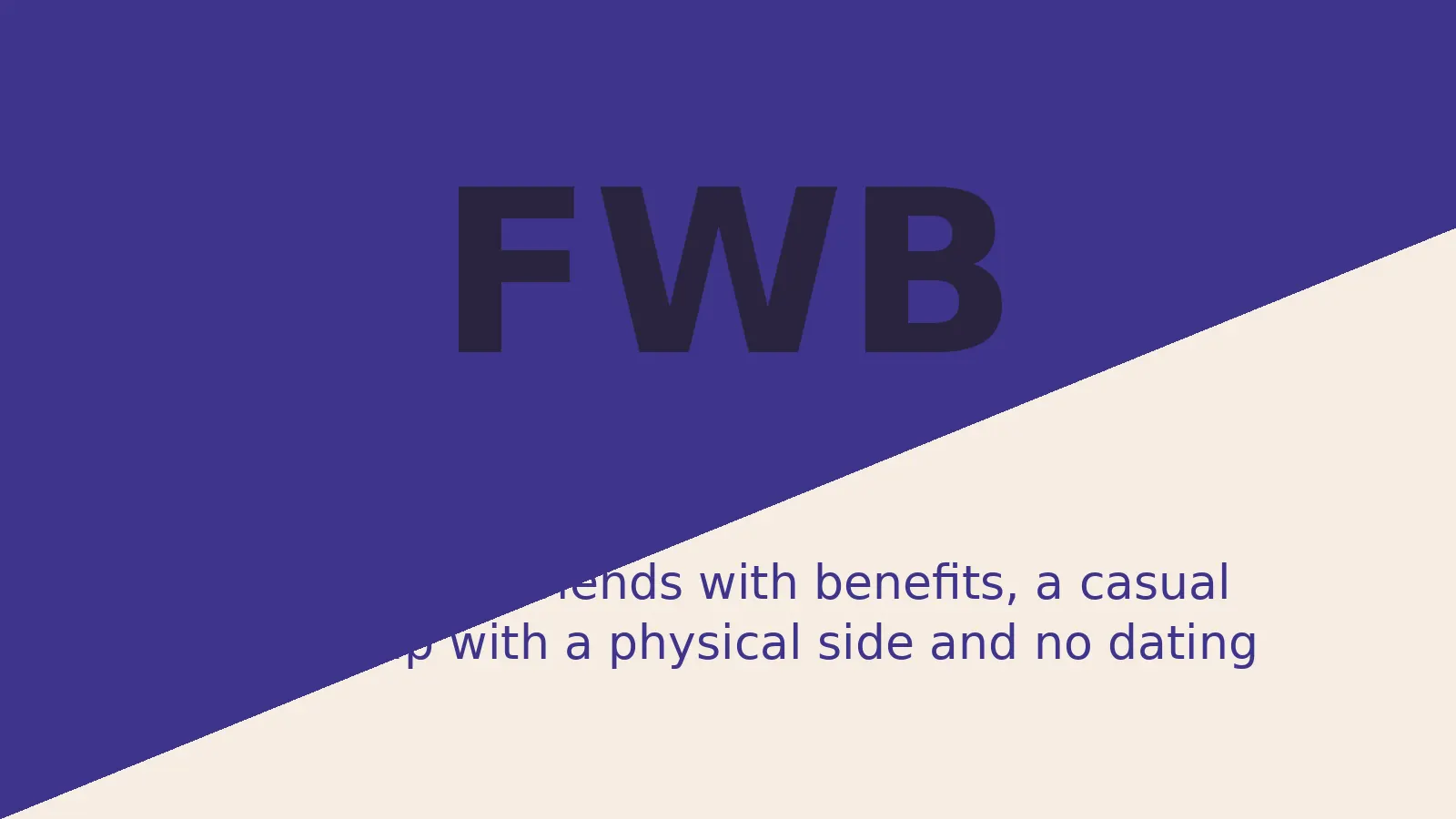
FWB means friends with benefits. In texting, it describes two friends who also share a physical, romantic style connection, but without dating, labels, or commitment. When someone types, we are just FWB, they mean the friendship is real, the closeness is real, but nobody is a boyfriend or girlfriend, and no future is being promised. You will see it in texts, dating app bios, and chats between friends who are trying to describe a casual setup in three quick letters. This guide explains what FWB means, how it is used, how it differs from a hookup and a situation ship, and how to reply when someone says it to you.
Key Takeaways
- FWB means friends with benefits, friendship plus a physical connection, with no dating label.
- It is ongoing, unlike a one night stand, because the two people keep seeing each other as friends.
- It is not dating: no titles, no promises, and no long term plans are part of the deal.
- Clear talk and honesty matter, because feelings can grow on one side.
- You say the letters one by one: F-W-B.
What Does FWB Mean in Texting?
FWB is short for friends with benefits. That is the full meaning, and it works the same in almost every chat.
Break it into its two halves. The friends part means the two people know each other, talk, laugh, and spend time together like normal friends. The benefits part is slang for the physical side of the connection, the part that goes past friendship.
Put together, FWB names a setup, not a title. Nobody is in an official relationship. Nobody owes the other person anniversaries, meetings with family, or plans for next year. It is casual on purpose, and both people are expected to know that from the start.
Most people type it in lowercase, fwb, or keep the capital letters on dating apps. It can work as a label, we are FWB, or as an offer, looking for FWB. If casual short forms are new to you, our guide on cwm meaning shows another invite style word friends use in chats.
How People Use FWB in Chats and Dating Apps
FWB shows up where people talk about dating, plans, and modern relationships. The three letters do a lot of explaining in very little space.
In regular texting
Between friends, FWB is often used to keep things clear. Example: I like hanging out with you. Let us keep it FWB, nothing serious. The word is there to stop mixed signals before they start.
On dating apps
Bios use FWB as a filter. A profile might say, not looking for love, FWB only. It tells matches in one glance what kind of connection the person wants, so nobody wastes a week guessing.
On Snapchat and Instagram
In DMs, FWB usually appears after two people already know each other. It might come up as a direct question, so are we FWB or just friends, when someone wants to name the situation out loud.
In group chats with friends
Friends use it as a label for someone else dynamic. A line like, they are not dating, they are FWB tells the whole story fast, with no need for a long report.
In every app, the job of FWB is the same: it says friendship and physical closeness, minus the relationship rules.
FWB vs Hookup vs Situationship: What Is the Difference?
These three words get mixed up all the time, and the mix up is where hurt feelings start. They are not the same thing.
An FWB setup is built on a real friendship and repeats over time. A hookup is usually a one time or rare event, often with someone you barely know. A situationship is murkier: two people act like a couple in many ways, but the relationship has no clear label, and one or both people may secretly want more.
Here is a quick table to make it clear:
| Term | What it means | How long it lasts |
| FWB | Friends with a physical connection, no dating label | Ongoing, while both agree |
| Hookup | A casual physical meeting, often with a near stranger | Once, or here and there |
| Situationship | Couple like behavior with no clear label | Unclear, often messy |
| Dating | A romantic relationship with real commitment | Long term, with plans |
If you want the flip side of casual, our hmu meaning guide shows how these invite words work in everyday chats.
How to Reply When Someone Says FWB to You
This is the part most guides skip, and it is the part people actually need. If someone offers or suggests FWB, your reply sets the whole tone.
If you are okay with it, say so plainly and add your line. For example: Works for me. Let us keep it honest and simple. Clear words at the start save drama later.
If you are not okay with it, that is a complete answer too. Try: I am looking for something real, so this is not for me. You do not owe a long speech, and a kind no beats a forced yes every time.
If you are not sure, buy time honestly. Say: I need to think about that. Acting sure when you are not is how feelings get tangled.
A few short chats show the word in real life:
*Alex:* What are you looking for on here?
*Jordan:* Honestly, just FWB. No strings attached.
*Sam:* So what are we, exactly?
*Riley:* Friends. FWB, nothing more. That still good with you?
*Sam:* Yeah, as long as we stay honest.
*Maya:* He said he wants to be FWB.
*Lily:* And you want a real relationship. Maya, that is your answer right there.
Notice the pattern: the healthiest chats name the setup, check the other person feelings, and keep the door open for honesty.
How to Use FWB in a Sentence
Here are simple examples that show the word doing its job.
Everyday examples:
We are not dating, we are just FWB.
His bio says he is only looking for FWB.
She ended the FWB setup when feelings got involved.
They stayed friends after the FWB part ended.
Being FWB only works if both people want the same thing.
Quick meanings:
- just fwb → friends only, with a physical side, nothing serious
- looking for fwb → open to a casual setup, not dating
- my fwb → the friend someone has this setup with
- fwb? → a short way to ask if the other person is interested
The word works best when both people hear the same meaning. If there is any doubt, spell it out in full sentences instead of letters.
When Should You Use FWB?
Use FWB in private, adult, casual conversations about dating and relationships, with people who already know the term. It fits dating apps, chats with close friends, and honest talks with the person involved.
Keep it out of work chats, family group threads, and anywhere a screenshot could travel. It is personal slang, and it names a private part of life.
The bigger rule is about honesty, not spelling. FWB only stays light when both people truly want the same casual setup. The moment one side hopes it will turn into love, the kind thing is a real conversation, not more three letter labels.
Frequently Asked Questions
What does FWB stand for?
FWB stands for friends with benefits. It means two friends who share a physical connection without being in a committed romantic relationship.
Is FWB the same as dating?
No. Dating points toward a relationship, with titles, time, and future plans. FWB skips all of that on purpose. It is friendship plus closeness, with no promise of more.
Can an FWB turn into a real relationship?
It can happen, because feelings do not read rule books. One person starts wanting more, and the setup changes or ends. That is why honest check-ins matter, so nobody is guessing alone.
What does FWB mean on a dating app?
On a dating app, FWB in a bio tells matches the person wants something casual and ongoing, not dates that lead to a relationship. It is a filter, so people looking for love can move on quickly.
How is FWB different from a one night stand?
A one night stand happens once, often with a stranger. FWB is ongoing and starts from a real friendship, so the two people keep talking and meeting like friends do.
How do you pronounce FWB?
Say the letters one by one: ef, double you, bee. Out loud, people usually say the full phrase, friends with benefits, because the letters alone can sound cold.
Conclusion
FWB means friends with benefits: a real friendship with a physical side, and no dating label, title, or promise riding on top of it.
Now you know what it means, how it stands apart from a hookup and a situationship, and how to answer when the word lands in your chat. Whatever you choose, clear and kind words will take you further than three letters ever could.

Hi, I’m Benjamin Dreyer. I enjoy exploring the English language and making difficult words simple to understand. At Defineexa.com, I write about word meanings, text abbreviations, acronyms, and internet slang. My goal is to give readers clear, accurate, and easy-to-read explanations that help them learn something new and use English with greater confidence every day.