
You’ve probably seen the word thrown around online in a news headline, a comment section, or a friend’s rant about a shady business deal.
So what does grifter actually mean?
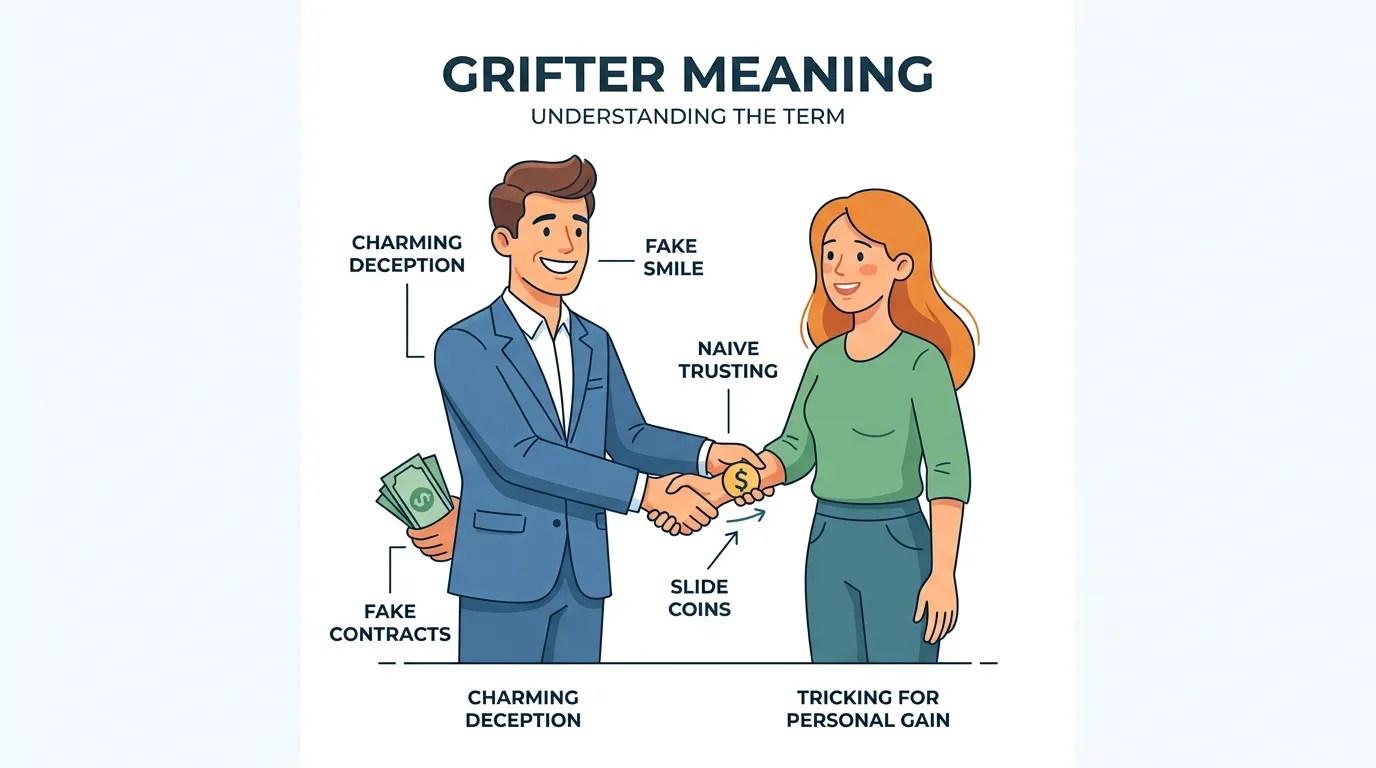
A grifter is someone who makes a living, or at least extra money, by tricking or manipulating people for personal gain usually through charm, false promises, or small-scale scams rather than outright violence or force.
The word carries a specific flavor: it’s less about one big heist and more about someone who treats deception as a lifestyle.
By the end of this article, you’ll know exactly where the term comes from, how it’s used today, and how to spot one before they cost you money, trust, or both.
Where the Word Grifter Comes From
Grifter has roots in early 20th-century American slang, tied to carnival and circus culture. Traveling fairs often had con men working the crowds rigged games, fake fortune tellers, quick-money hustles. The word grift described this kind of low-level, opportunistic swindling, and grifter became the label for the person running it.
Unlike words tied to organized crime or violent theft, grifter has always had a slightly theatrical edge. It implies performance. A grifter isn’t breaking down your door they’re standing at it with a smile, a story, and a reason you should hand something over willingly.
That performance angle is still the core of the word today, even though grifters have moved from carnival midways to social media, crowdfunding pages, and boardrooms.
Grifters Meaning
A grifter is someone who tricks others out of money or valuables through clever lies and smooth talk. These individuals rely on charm, quick thinking, and false promises rather than force. They often target trusting people with schemes that seem harmless at first. The term paints a picture of a street-smart hustler who thrives on deception for personal gain. Understanding this word helps spot dishonest behavior in everyday life and media stories.
Example 1: A person sells “lucky” charms door-to-door, claiming they bring instant wealth, then vanishes after collecting cash. Example 2: Someone invents a fake investment opportunity and persuades friends to hand over savings before disappearing.
What’s a Grifter
A grifter is a skilled con artist who uses persuasion and deceit to take money from unsuspecting victims. Unlike bold thieves, grifters work through conversation, building false trust before striking. They often appear friendly and helpful while hiding selfish motives. This type of person thrives in situations where people feel hopeful or desperate. Learning the term makes it easier to recognize manipulative tactics in real conversations or online scams.
Example 1: A stranger approaches you claiming your car needs urgent repairs and offers a “special discount” that leads to overcharging. Example 2: An online seller advertises rare collectibles at low prices, takes payment, and never ships the items.
Define Grifter
To define grifter: it is a person who obtains money or advantages by means of fraud and smooth deception. Grifters specialize in small-scale confidence tricks rather than large criminal operations. They depend on psychological manipulation, storytelling, and timing. The word captures both the cleverness and the dishonesty of such characters. Knowing this definition sharpens awareness of people who promise easy rewards that never materialize.
Example 1: A “talent scout” approaches aspiring actors, demands an upfront fee for representation, then provides nothing. Example 2: Someone runs a fake charity drive, collecting donations for a disaster that never occurred.
What Does Grifter Mean
What does grifter mean? It refers to an individual who swindles others through cunning schemes and false stories. The focus is on verbal skill and charm rather than physical force. Grifters often move quickly from one target to the next, leaving little evidence behind. The meaning highlights everyday fraud that can happen in markets, social circles, or digital spaces. Grasping this helps protect personal finances and trust.
Example 1: A man claims he can fix credit scores overnight for a large fee, then delivers no results. Example 2: A woman poses as a lost tourist needing emergency cash and never returns the “loan.”
Grifter Def
Grifter def: a short form for the definition of someone who practices small-time cons and scams for money. This person uses clever talk and invented situations to separate victims from their cash. The emphasis stays on deception over violence. A clear grifter def equips readers to identify warning signs early. It remains a useful term in both casual conversation and discussions about fraud prevention.
Example 1: An individual sells “guaranteed” lottery systems that produce no winning tickets after payment. Example 2: A self-proclaimed expert offers exclusive stock tips for a membership fee that yields only losses.
Grifter Examples
Grifter examples show how these deceptive people operate in real situations. They range from street-level hustles to digital tricks that exploit hope or fear. Studying clear cases makes the pattern easier to notice. Each example reveals the mix of charm, urgency, and false promises that define the behavior. Recognizing these patterns builds stronger personal defenses against similar schemes.
Example 1: A charming stranger at a café claims to be a visiting executive who lost his wallet and needs temporary funds, promising repayment that never arrives. Example 2: An influencer promotes a miracle weight-loss product, collects affiliate money, then vanishes when customers report no results.
Grifter Meaning in Plain English
Strip away the history, and here’s the modern, everyday definition:
Grifter (noun): a person who habitually deceives others, usually for money or status, through charm, false credentials, manipulation, or small cons rather than large-scale or violent crime.
A few things separate this from other words for dishonest people:
- It’s about pattern, not a single act. Calling someone a grifter usually implies this is how they operate, not a one-time lapse in judgment.
- Charisma is part of the toolkit. Grifters tend to be likable, persuasive, or good at building trust quickly; that’s often how the scam works.
- The scale is personal, not institutional. A grifter cons individuals, small groups, or investors directly. Compare that to large-scale financial fraud carried out through complex institutional systems, which usually gets different labels entirely.
Grifter vs. Con Artist vs. Scammer: What’s the Difference?
These words overlap, but they’re not identical. If you’re trying to describe someone accurately, the distinctions matter.
| Term | Core Meaning | Typical Vibe |
| Grifter | Habitual small-scale deceiver, often relies on personal charm | Opportunistic, ongoing, personality-driven |
| Con artist | Someone who runs an elaborate, planned deception (a con) | Strategic, often a specific scheme with a clear target |
| Scammer | Broad term for anyone running a scam, digital or in-person | Generic, no implication of charm or style |
| Fraudster | Legal/financial term for someone committing fraud | Formal, often used in legal or business contexts |
| Swindler | Older term, similar to con artist, implies taking money through trickery | Old-fashioned, still money-focused |
The short version: every con artist could reasonably be called a grifter, but not every grifter runs a full con. Some grifters just drift from one small hustle to the next a fake investment tip here, a borrowed loan they never repay there without ever mounting one big elaborate scheme.
How Grifter Is Used Today
The word has expanded well past its carnival origins. Here’s where you’ll actually encounter it now.
In Politics and Media
Grifter gets applied to public figures accused of using their platform, position, or public trust for personal financial gain. Think someone who builds an audience around a cause, then quietly monetizes that trust through questionable products, donations, or deals that mostly benefit them.
In Business and Startups
Startup culture has its own grifter archetype: the founder who’s better at pitching than building, who raises money on charisma and vague promises rather than a working product. When a company collapses and it turns out the founder knew it was shaky the whole time, grifter is often the word that follows them.
In Everyday Relationships
On a smaller, more personal scale, people use grifter for someone who consistently borrows money they don’t repay, exaggerates their job or wealth to impress people, or manipulates friends and partners for favors, gifts, or free labor.
Online and in Pop Culture
Social media has created new grifter territory: fake giveaways, get rich quick courses sold by people who got rich mainly by selling the course, and influencers who promote products or causes they don’t actually believe in for a paycheck.
Common Traits of a Grifter
There’s no official checklist, but certain patterns show up again and again. Recognizing them early can save you money, time, or a damaged relationship.
- Fast intimacy. They build trust unusually quickly, compliments, shared interests, a sense that you just click.
- Vague credentials. Their background, job, or expertise sounds impressive but falls apart under specific questions.
- Urgency. There’s often a reason you need to decide, pay, or commit right now, before you have time to check facts.
- Shifting stories. Details about their life, plans, or promises change slightly each time they tell them.
- A trail of unresolved debts or broken promises. Ask around, and you’ll often find you’re not the first person they’ve asked for money or favors.
- They’re never the problem. Past failures or fallouts are always someone else’s fault an unfair boss, a jealous ex, a business partner who screwed them over.
None of these traits alone proves someone is a grifter. Plenty of honest people are also fast, charming talkers. It’s the combination, repeated over time, that’s the real signal.
How to Spot a Grifter: A Quick Checklist
Use this as a gut-check before you lend money, invest, or take a big leap of trust with someone new.
- [ ] Can you verify their claims independently (job, business, past projects)?
- [ ] Do they get defensive or vague when you ask direct, specific questions?
- [ ] Is there pressure to act fast, before you can do due diligence?
- [ ] Have other people had similar experiences with them, once you actually ask around?
- [ ] Does their story about themselves change over time?
- [ ] Are they asking for money, access, or favors earlier than feels normal for the relationship?
If you’re checking off more than one or two of these, it’s worth slowing down.
Is Grifter Always Fair to Use?
Not always and it’s worth being careful with the label. Calling someone a grifter is a strong accusation. It implies intent to deceive, not just bad luck, poor judgment, or a failed business that was run in good faith. Plenty of entrepreneurs fail honestly. Plenty of public figures make mistakes without meaning to mislead anyone.
The fair use of the word usually requires a pattern: repeated deception, a consistent gap between what someone claims and what’s actually true, and personal gain at someone else’s expense. A single failure or one bad call doesn’t make someone a grifter, it’s the habit that earns the title.
FAQs
Q: Grift meaning?
A: Grift means a dishonest scheme or scam used to get money or benefits.
Q: Grifter meaning in farsi?
A: In Farsi, grifter refers to a person who cheats or tricks others for personal gain.
Q: Grifter meaning Arabic?
A: In Arabic, grifter refers to a fraudster or someone who deceives others for money.
Q: Grifter meaning in the Bible?
A: Grifter is not a specific biblical term, but it describes someone who deceives others for personal gain.
Q: Grifter meaning in Chinese?
A: In Chinese, grifter can describe a scammer, fraudster, or person who tricks others for money.
Q: Grifter meaning social media?
A: On social media, grifter usually means someone who uses deception or controversy to gain money or attention.
Q: Grifter meaning in russian?
A: In Russian, grifter refers to a con artist or person who deceives others for personal profit.
Q: Grifter meaning online?
A: Online, grifter usually means someone who scams, deceives, or exploits people for money or other benefits.
Conclusion
A grifter is someone who habitually deceives people for personal gain, usually relying on charm and small-scale manipulation rather than force or one big scheme. The word shows up everywhere now in politics, business, social media, and everyday relationships but it’s most accurate when there’s a clear pattern of dishonesty, not just a single misstep.
If you’re evaluating someone new, whether it’s a business partner, an online seller, or a new friend asking for favors, trust the pattern over the pitch. Take your time, verify what you can, and let consistency or the lack of it tell you what you need to know.

Hi, I’m Benjamin Dreyer. I enjoy exploring the English language and making difficult words simple to understand. At Defineexa.com, I write about word meanings, text abbreviations, acronyms, and internet slang. My goal is to give readers clear, accurate, and easy-to-read explanations that help them learn something new and use English with greater confidence every day.