You open a text and see “YFM” stuck at the end of a friend’s message. You stare at it for a second. Is it a typo?
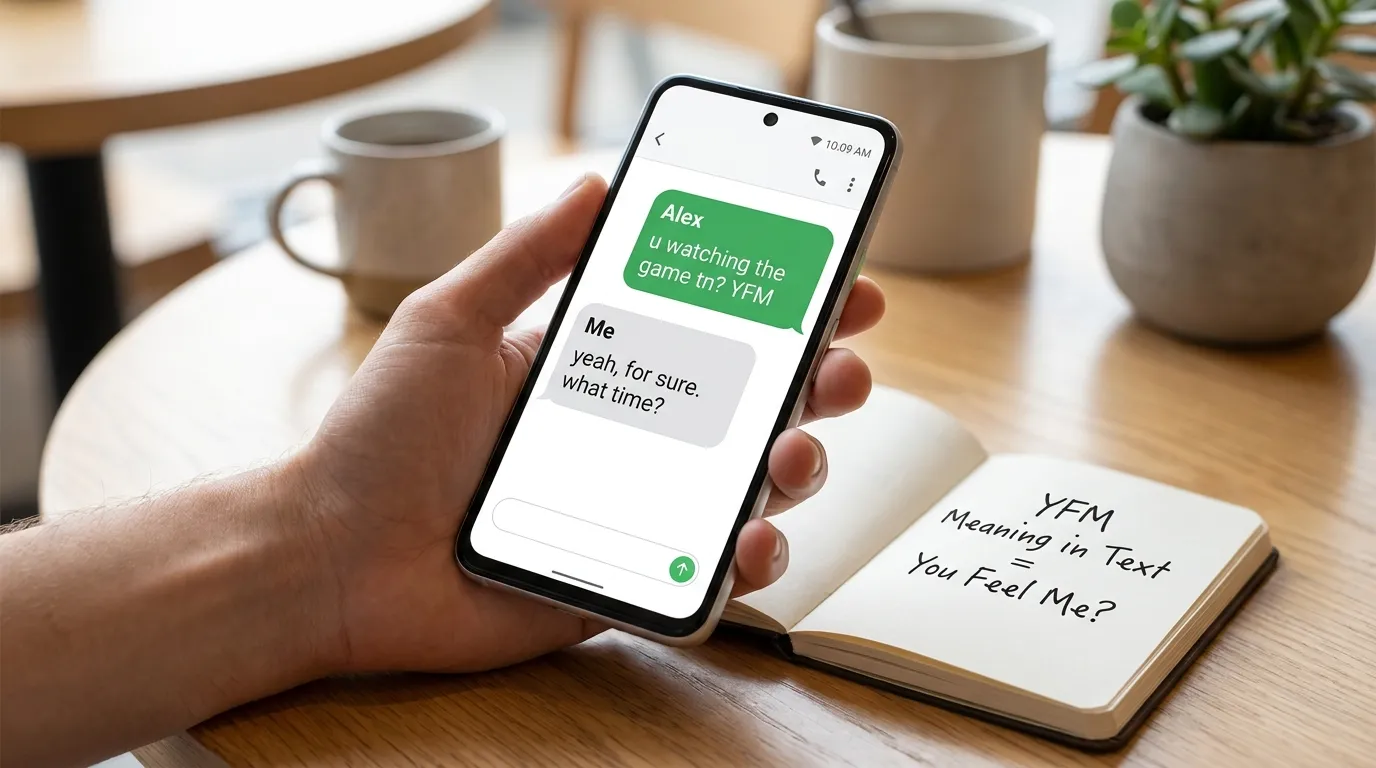
A new app? Something you’re supposed to already know? Most of the time, YFM simply means “You Feel Me?” a casual way of asking if you understand, relate to, or agree with what the person just said.
This guide walks through every real use of the term, how people actually drop it in chats, the mistakes that trip people up, and the close cousins that get mixed up with it.
Quick Answer
YFM stands for “You Feel Me?” (sometimes written “Ya Feel Me”). It’s a short, friendly check-in that asks whether the other person gets your point, shares the feeling, or is on the same page. You’ll see it most often at the end of a statement in texts, group chats, Snapchat, Instagram DMs, TikTok comments, and Discord. The phrase comes from spoken language in African American Vernacular English and hip-hop culture, then got shortened for texting. It’s almost never about physical touch, it’s about emotional or mental connection.
What YFM Really Means When People Text It
The core idea is simple. Someone shares a thought, a complaint, a plan, or a feeling, then adds YFM to invite you in. They’re not just looking for a yes/no answer about the words. They’re checking if the vibe landed.
Think of it like the digital version of a raised eyebrow or a knowing nod across the room. “I’m so done with this job, YFM?” is asking more than “Did you hear the sentence?” It’s asking “Do you feel that frustration too?”
You’ll notice the question mark is optional. Some people type “yfm” lowercase with no punctuation. Others write “YFM?” The tone stays casual either way. In most everyday chats the meaning stays steady: understanding plus a bit of shared emotion.
A smaller number of people use a flirty spin closer to “You’re feeling me?” when the conversation already has chemistry. Context makes the difference clear. If the chat has been light and playful all night, the same three letters can carry a different weight. Outside of that specific vibe, the default reading is the straightforward “do you get me?” version.
Other expansions exist but stay rare in texting. “Your Favorite Martian” refers to an old YouTube music project. “Youth FM” is a radio station name in some places. These almost never show up in personal messages unless the topic is already about music or radio. When someone drops YFM in a regular chat, “You Feel Me?” is the safe, accurate read.
Where You’ll Actually See YFM Used
Text messages and group chats are home base. A friend vents about a rough day, ends with YFM, and waits for the “fr” or “hard same” reply. The term works because it’s low-pressure. It keeps the conversation open without demanding a long response.
On Snapchat the same pattern shows up in streaks and private stories. Someone posts a blurry photo of their messy desk with the caption “another all-nighter yfm.” The people who reply usually already know the context, so the abbreviation feels natural.
Instagram and TikTok lean more public. Captions and comments use YFM to invite relatability. “Mondays should be illegal, YFM?” under a meme tends to pull quick “facts” replies. In DMs the usage shifts back to one-on-one checking, the same way it works in regular texting.
Discord and gaming chats treat it as shared-frustration glue. After a match falls apart because someone pushed too early, the chat lights up with “bro that was painful yfm.” The term signals the group is on the same emotional page about the loss.
WhatsApp and iMessage follow the same casual rules. The only place YFM feels out of place is formal or work settings. Dropping it in an email to your manager or a professional Slack channel usually lands wrong. Save it for people who already talk to you in slang.
One small field note: the term skews younger but isn’t locked to any single generation. People in their teens and twenties use it most, yet plenty of adults who grew up with early texting still drop it without thinking. Platform matters more than age. Wherever the chat is informal and fast, YFM fits.
Real Examples of YFM in Everyday Messages
Here are realistic exchanges that show how the term actually appears:
Friend A: this week has been nonstop meetings and zero progress
Friend B: yfm. i’m running on coffee and spite at this point
A: i told her i needed space and she still keeps texting
B: yfm… that’s exhausting
A: pizza is the only correct dinner choice after a day like this yfm?
B: always. order the large
In a group chat after a bad game:
“we had them and then someone decided to push alone yfm”
Replies come in as “fr,” “pain,” or “don’t even start.”
On a Snapchat story:
“3 am and still rewriting this paper yfm”
Close friends reply with fire emojis or “same energy.”
Flirty version (only when the chat already leans that way):
“you keep looking at my stories like that… yfm?”
The tone and history of the conversation do the heavy lifting. Without that history the same message would just read as a regular check-in.
Notice how YFM almost always sits at the end. It turns a statement into an invitation. The person isn’t demanding agreement. They’re opening the door for it.
Common Mistakes and How to Avoid Them
The biggest mix-up is treating YFM like a full question that needs a detailed answer. Most of the time a short “yeah,” “fr,” “hard same,” or even just a reaction emoji is enough. Over-explaining can kill the casual flow.
Another frequent slip is using it in the wrong setting. Work emails, school papers, or messages to someone who never uses slang can make the sender look like they’re trying too hard or simply not reading the room. Stick to friends and peers who already talk this way.
Some people assume every YFM is flirty. That’s not true. The romantic reading only works when the rest of the conversation supports it. Reading every instance that way leads to awkward misunderstandings.
Typing the full phrase “you feel me” when the chat is already heavy on abbreviations can feel slightly off. The shortened form is the natural one in fast messaging. Conversely, spelling it out can feel warmer in a longer, more thoughtful text.
A quiet but real mistake is ignoring tone. The same three letters can sound supportive, exasperated, or playful depending on the words before them and the relationship. Context always wins.
Related Terms People Often Confuse with YFM
YKWIM (You Know What I Mean) is the closest cousin. Both check for understanding, but YKWIM feels a bit more about logic and less about shared feeling. “The traffic was ridiculous, YKWIM?” focuses on the facts. “The traffic was ridiculous, YFM?” leans into the shared annoyance.
FR (For Real) often follows or pairs with YFM. Someone says “this is the worst day ever yfm” and the reply comes back “fr.” FR confirms the intensity; YFM invites the connection.
IYKYK (If You Know You Know) is different. It assumes the other person already gets an inside reference. YFM is still asking the question.
“I feel you” is the spoken reply version. When someone texts YFM, answering “I feel you” or “I feel that” is a natural full-phrase response.
These terms live in the same casual space, so they often appear in the same conversations. Knowing the slight differences keeps the replies precise.
| Term | Core Meaning | Typical Tone | Best Used When |
| YFM | You Feel Me? | Warm, checking connection | Sharing a feeling or point and wanting empathy |
| YKWIM | You Know What I Mean | Slightly more factual | Clarifying a logical or practical point |
| FR | For Real | Emphatic agreement | Confirming intensity after someone vents |
| IYKYK | If You Know You Know | Insider, exclusive | Referencing something only certain people get |
| Platform | How YFM Usually Appears | Example Vibe |
| Text / iMessage | End of a personal message | Supportive check-in with a close friend |
| Snapchat | Story captions or private chats | Quick, visual + short text |
| Instagram / TikTok | Captions and comments | Relatable public moments |
| Discord / Gaming | After matches or shared frustration | Group solidarity |
| WhatsApp group chats | Mid-conversation reactions | Everyday peer talk |
How to Use YFM Naturally Yourself
Start by matching the energy of the people you’re talking to. If the chat already uses FR, TBH, and other short forms, YFM will blend in. Drop it after a statement that carries some feeling a complaint, a plan, a small win, or a shared annoyance.
Keep the rest of the message clear. “I’m skipping the party tonight, too tired, YFM?” works because the main point is already stated. The abbreviation just invites the other person to respond.
If you’re on the receiving end, a short confirming reply is almost always enough. “Yeah,” “I feel you,” “hard same,” or even “100” keeps the conversation moving. Only expand if you have something useful to add.
Avoid forcing it. If the conversation is already formal or the other person never uses slang, skip it. The term works best when it feels effortless.
FAQs
Q: Yfm meaning in text from a guy
A: YFM means “You Feel Me?” — a guy is asking if you understand or relate to what he just said.
Q: Yfm meaning in text funny
A: YFM means “You Feel Me?” and is often used humorously to check if someone gets the joke or vibe.
Q: What does yfm mean on tiktok
A: On TikTok, YFM means “You Feel Me?” and is used in comments or captions to ask if others relate to the content.
Q: YFM meaning from a girl
A: YFM means “You Feel Me?” — a girl is checking if you understand or agree with what she shared.
Q: Yfm meaning in text urban dictionary
A: According to Urban Dictionary, YFM means “you feel me,” asking if someone understands or gets what you’re saying.
Q: What does yf mean in text
A: YF most commonly means “Your Friend” or, in gaming, “You Fail,” depending on context.
Q: What does yfm mean on snap
A: On Snapchat, YFM means “You Feel Me?” and is used in chats or stories to ask if the other person relates.
Q: HJK meaning in text
A: HJK has no widely used slang meaning in texting; it most often refers to the Finnish football club Helsingin Jalkapalloklubi or “Hi Jump Kick” in gaming.
Conclusion
YFM is one of those small pieces of text slang that does a lot of quiet work. It turns a statement into a shared moment. Once you know the meaning, the next time it shows up in a chat you’ll know exactly what the other person is asking and how to answer without overthinking it.

Hi, I’m Benjamin Dreyer. I enjoy exploring the English language and making difficult words simple to understand. At Defineexa.com, I write about word meanings, text abbreviations, acronyms, and internet slang. My goal is to give readers clear, accurate, and easy-to-read explanations that help them learn something new and use English with greater confidence every day.