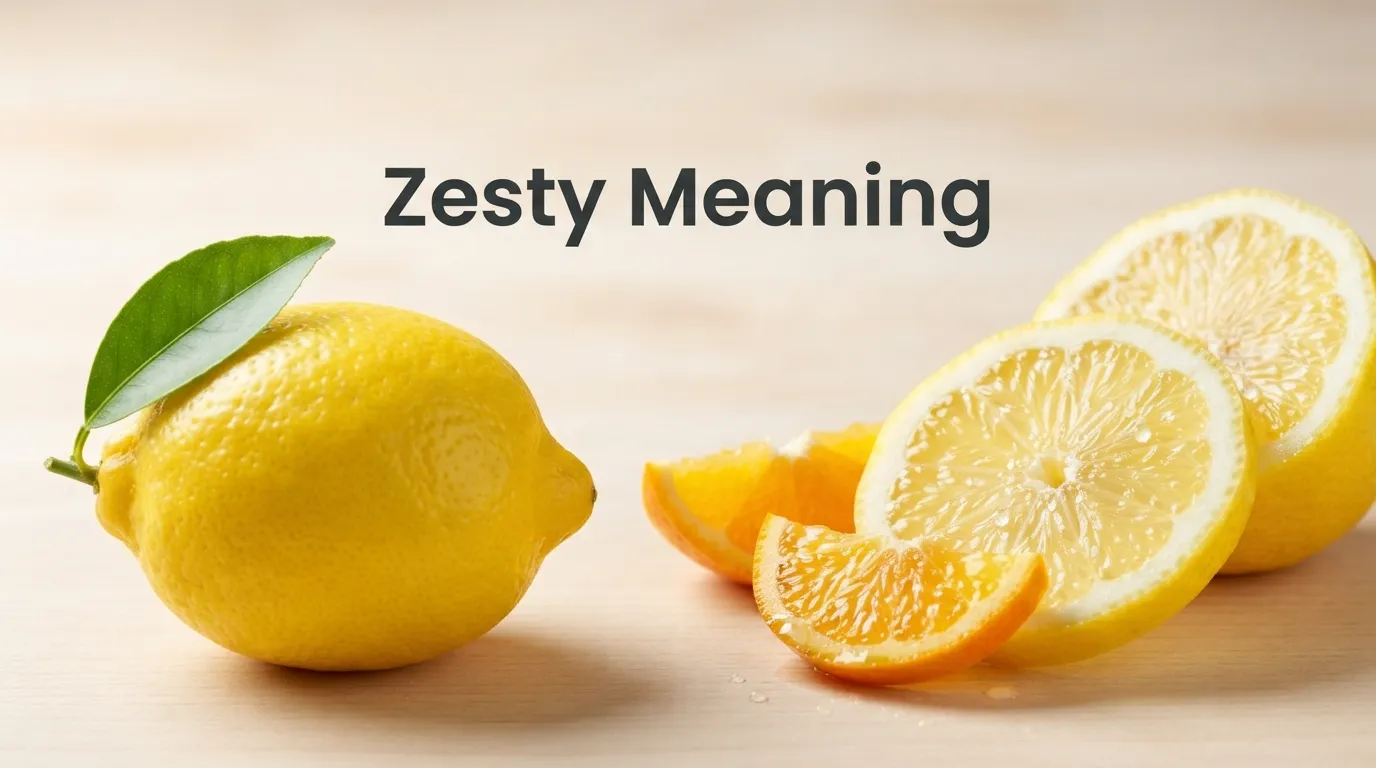
Zesty means fresh, lively, or full of strong flavor. We often use it for food with a bright taste, such as lemon or lime. It can also describe a person who is full of energy.
The meaning can change a little based on the sentence. In most cases, zesty has a positive feel. It can make food sound fresh and exciting.
It can also make a person sound fun, active, and full of life. You may see this word in recipes, food reviews, ads, or daily talks.
It is easy to use once you know the main idea. In this guide, we will look at the simple meaning of zesty, its uses, examples, and words that have a close meaning.
What Does Zesty Mean?
Zesty means having a fresh, sharp, lively, or strong quality.
The word is most often used for food. A zesty dish has a bold and fresh taste. Lemon, lime, orange, herbs, and some spices can give food this kind of taste.
But zesty is not only about food. It can also describe a person, mood, style, or event. In these cases, it means lively or full of energy.
For example:
- The sauce has a zesty taste.
- She has a zesty personality.
- The show had a zesty feel.
So, the main idea is simple. Zesty describes something that feels fresh, lively, or full of flavor.
Zesty Meaning in Food
When we talk about food, zesty often means fresh and sharp in taste.
Citrus fruits are a good example. Lemon and lime can give food a zesty taste. Some herbs and spices can do the same.
A zesty flavor can make a dish stand out. It does not have to mean that the food is hot or spicy.
For example:
- This salad has a zesty lemon dressing.
- The fish has a zesty lime sauce.
- We made a zesty tomato salsa.
The word is common in recipes and food reviews. It helps describe food in a short and clear way.
If someone says a meal is zesty, they may mean it has a bright taste that wakes up the palate.
What Does Zesty Mean for a Person?
Zesty can also describe someone’s personality.
When used this way, it means lively, active, cheerful, or full of energy.
A zesty person may speak with excitement. They may enjoy social events and bring energy to a group.
For example:
- She has a zesty personality.
- He has a zesty way of telling stories.
- Her zesty attitude made the team smile.
This use is more playful than formal. It is often used to give a person a lively and positive image.
Calling someone zesty usually suggests that they have plenty of spirit.
Zesty Meaning in Different Situations
The meaning of zesty depends on what it describes.
With food, it points to taste. With people, it points to energy. With writing or events, it can mean lively or exciting.
| Situation | Simple meaning | Example |
| Food | Fresh or sharp taste | A zesty sauce |
| Person | Lively and energetic | A zesty friend |
| Writing | Lively and fun | A zesty story |
| Event | Full of energy | A zesty show |
| Style | Bright and lively | A zesty design |
The meaning may change, but the basic idea stays the same.
Something zesty has a quality that feels fresh, strong, or lively.
Zesty Examples in Daily English
Examples can make this word easier to understand.
Here are some food examples:
- I love the zesty taste of fresh lime.
- The chef made a zesty chicken dish.
- This dressing adds a zesty touch to the salad.
Here are examples about people:
- My sister has a zesty personality.
- He brought a zesty mood to the party.
- She gave a zesty speech.
Here are examples about other things:
- The movie had a zesty sense of humor.
- The new design has a zesty look.
- The band gave a zesty performance.
These examples show why context matters. The word can describe both taste and energy.
Is Zesty the Same as Spicy?
No. Zesty and spicy do not mean the same thing.
Spicy usually means food has heat. Chili peppers are a common source of that heat.
Zesty usually means the food has a fresh, sharp, or bright flavor.
A dish can be zesty without being spicy. It can also be both.
For example:
- Lemon juice can make food zesty.
- Chili can make food spicy.
- Lime and chili can make a dish zesty and spicy.
So, if you mean heat, use spicy. If you mean fresh and bright flavor, zesty may be a better choice.
Zesty vs. Tangy
Zesty and tangy are close in meaning, but they are not exact matches.
Tangy often means sharp or slightly sour. Vinegar, yogurt, lemon, and some fruits can taste tangy.
Zesty can also describe a sharp taste. But it often adds a sense of freshness or brightness.
For example:
- The yogurt has a tangy taste.
- The lemon sauce has a zesty flavor.
- The lime dressing is both tangy and zesty.
The two words can overlap. The best choice depends on what part of the flavor you want to stress.
Is Zesty a Positive Word?
Yes, zesty is usually positive.
When used for food, it often makes the dish sound fresh and flavorful.
When used for a person, it often suggests energy and spirit.
For example:
- The zesty sauce made the meal more fun.
- Her zesty personality made people feel happy.
- The zesty performance kept the crowd interested.
The word can sound casual and playful. That makes it more common in everyday language than in very formal writing.
Zesty Synonyms
There are several words that can have a similar meaning.
For food, you might use:
- Fresh
- Tangy
- Sharp
- Flavorful
- Citrusy
- Bright
For people or activities, you might use:
- Lively
- Energetic
- Spirited
- Cheerful
- Enthusiastic
- Vibrant
These words are not always exact matches.
For example, citrusy tells you about flavor. Lively tells you about energy. Tangy points more toward a sharp or sour taste.
Choose the word that best fits your sentence.
Where Did the Word Zesty Come From?
The word zesty comes from zest.
In cooking, zest means the outer colored part of citrus fruit. People often use lemon or orange zest to add flavor to food.
The word later gained a wider meaning. It began to describe things that feel lively, exciting, or full of energy.
This helps explain why we can use zesty for both food and people.
A zesty lemon dish has a strong, bright flavor. A zesty person has a lively spirit.
Both uses share the idea of something being full of life or character.
How Do You Use Zesty in a Sentence?
You can use zesty before a noun or after a linking verb.
For example:
- She made a zesty sauce.
- The salad tastes zesty.
- He has a zesty personality.
You can also use it to describe an event, style, or creative work.
For example:
- The show had a zesty style.
- Her writing has a zesty tone.
- The party had a zesty mood.
Use the word when you want to show freshness, energy, or strong character.
If another word gives a more exact meaning, use that instead.
Common Mistakes With the Word Zesty
One common mistake is thinking that zesty always means spicy.
That is not true. A lemon drink can be zesty without being spicy at all.
Another mistake is thinking that zesty only describes food.
It can also describe people, writing, events, styles, and moods.
Some people also think zesty always means sour. This is not quite right either.
A zesty flavor may be sharp or citrusy, but the word can also suggest freshness and energy.
Remember these three points:
- Zesty does not always mean spicy.
- Zesty can describe people and things.
- Zesty does not always mean sour.
Context tells you the exact meaning.
FAQs
What does zesty mean in simple English?
Zesty means fresh, lively, sharp, or full of strong flavor.
Does zesty mean spicy?
No. Zesty usually means fresh or sharp in flavor. Spicy usually means hot or full of heat.
What does zesty mean when describing a person?
It means lively, energetic, cheerful, or full of spirit.
Is zesty a good word?
Yes. Zesty is usually a positive word. It often suggests freshness, energy, or enjoyable flavor.
What is another word for zesty?
Depending on the context, you can use words like fresh, tangy, lively, energetic, sharp, or spirited.
Can you use zesty for drinks?
Yes. A drink can be zesty when it has a fresh, bright, or sharp flavor. Lemon and lime drinks are common examples.
Conclusion
The zesty meaning is simple: it describes something fresh, lively, sharp, or full of flavor. For food, it often points to a bright taste, such as lemon or lime. For people, it can mean lively and energetic. It can also describe writing, events, styles, and moods. Zesty is usually a positive word, and its exact meaning comes from the context. When you see or use this word, think of something with extra freshness, flavor, or energy.

Hello, I’m Mark Nichol. I’ve always been passionate about English words and how they are used in everyday communication. At Defineexa.com, I share simple guides on word meanings, acronyms, texting abbreviations, and modern slang. I believe learning English should be easy, practical, and enjoyable, so every article is written with clarity and accuracy in mind.