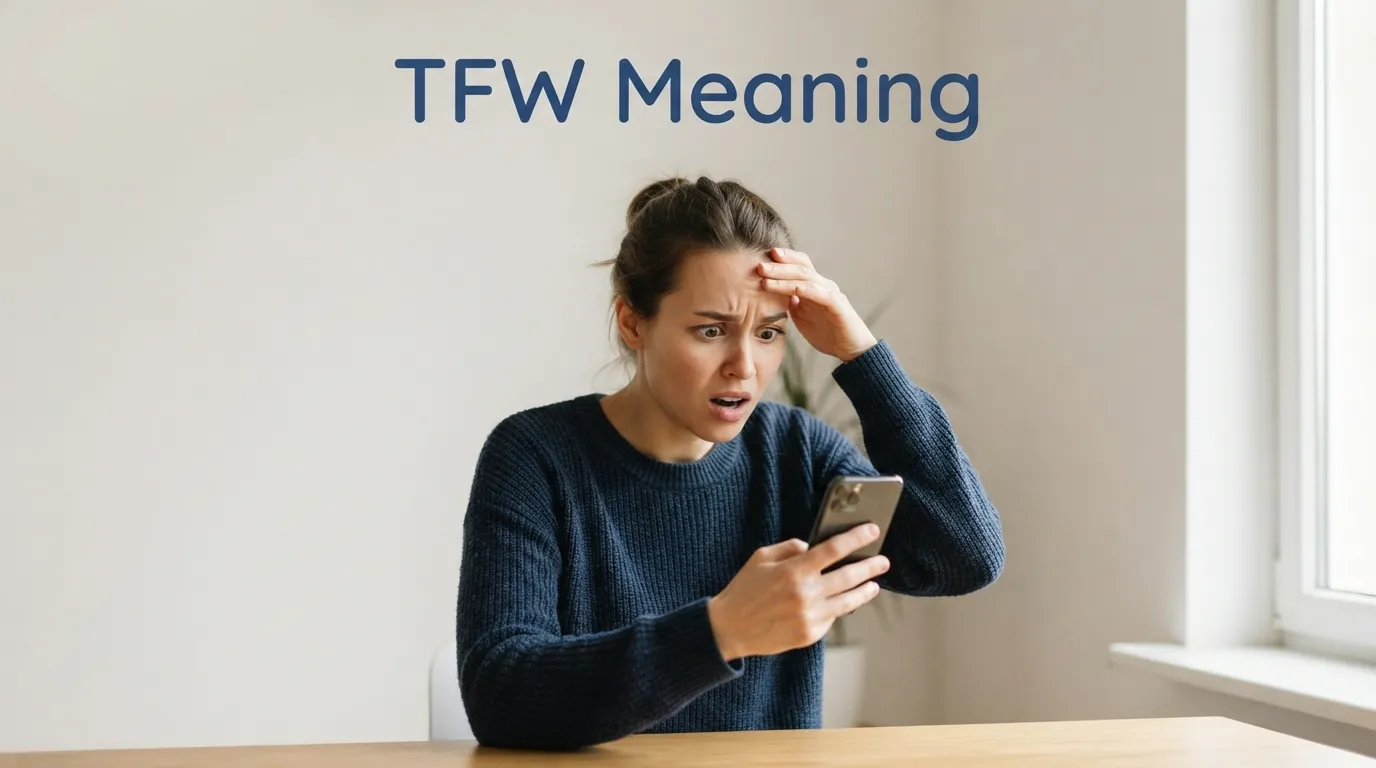
TFW means that feeling when. People put it at the start of a short line, a meme, or a photo caption to point at a very specific, relatable feeling, like tfw you wake up and realize it is Saturday. The letters set the scene, and the words after them deliver the moment. You will see TFW on TikTok, Instagram, X, Reddit, and in group chats everywhere. This guide explains the tfw meaning in simple words, shows how to use it in texts and memes, clears up tfw vs mfw vs POV, and answers the questions people really ask about this little internet opener.
Key Takeaways
- TFW means that feeling when, and it opens a relatable moment.
- It almost always comes with a photo, a meme, or a funny short sentence.
- The sentence after tfw works without grammar rules; the fragment is the joke.
- TFW is the feeling, MFW is the face, and POV is the point of view.
- It is casual internet slang, fine for chats and captions, not for formal writing.
What Does TFW Mean in Texting?
TFW stands for that feeling when. Nobody is describing the letters. They are pointing at an emotion and saying: you know this feeling, right?
Here is how it works. Instead of telling a whole story, a person writes tfw and then the moment:
tfw you open the fridge for the third time, hoping new food appeared
tfw your phone is at 2 percent and the charger is in another room
tfw you finally sit down after a day that never stopped
Each line is unfinished on purpose. The reader fills in the rest from their own life, and that shared flash of recognition is the whole pleasure of the format.
In texts, tfw usually arrives with a reaction photo, a GIF, or a screenshot that shows the feeling on a face. The text names the moment; the picture wears the emotion. Together they say more in five seconds than a paragraph could.
You say the letters one by one: T-F-W. Out loud, though, people almost always say the full words, that feeling when.
How People Use TFW in Texts and Memes
TFW has a few favorite homes online, and each one shapes it a little.
In memes and captions
This is tfw headquarters. A photo of a drained, staring face plus the caption tfw the meeting could have been an email says everything. The joke lands because everyone has sat in that meeting.
In group chats
Friends drop tfw lines after telling a tiny story. Someone describes missing the bus in the rain, then adds: tfw the day just decides to be like this. The chat replies with laughing emojis and their own versions.
On TikTok and Reels
Creators act out the moment. The text on screen starts with tfw, and the video performs the feeling: the slow blink, the deep sigh, the victory dance in the kitchen.
In short chats:
*Maya:* tfw you study all night and the test is postponed
*Ben:* That exact panic. Sleep or celebrate, no one knows.
*Zoe:* tfw the package says delivered and nothing is at the door
*Liam:* The five stages of grief, speedrun edition.
Quick meanings:
- tfw you are right → that proud, smug moment when your guess turns out correct
- tfw nobody texts back → the quiet, slightly dramatic loneliness joke
- tfw payday hits → pure relief and instant big plans
- tfw you hear your name in another conversation → ears up, instant attention
Short chat openers like this run modern messaging, and our guide on wbu meaning explains another tiny phrase that keeps conversations moving.
TFW vs MFW vs POV: What Is the Difference?
These three openers are cousins, and people mix them up all the time. This table separates them cleanly:
| Opener | Full form | What it points at |
| TFW | That feeling when | The emotion inside the moment |
| MFW | My face when | The facial expression the moment creates |
| POV | Point of view | A scene shown as if you are inside it |
TFW is about the inner feeling. tfw your song comes on in a random store is about the sudden joy, wherever your face is.
MFW needs a face. People post a shocked, blank, or grinning picture and write mfw I open my exam results. The photo does the talking; the caption just sets it up.
POV puts the viewer inside the scene. POV: you are the last slice of pizza is shot or written from that angle, as if it is happening to you right now.
A simple test sorts them out. Feeling? TFW. Face in a picture? MFW. Camera inside the moment? POV. The three often travel together, and mixing them playfully is part of internet humor.
Where Did TFW Come From?
TFW grew up in early internet forums and image boards, where users told short, relatable stories and reacted to each other's posts. In those spaces, a cousin phrase also lived: that feel, a sad, joking way of naming a lonely or bittersweet emotion.
As meme culture grew through the 2010s, the short form TFW took off. It was fast to type, easy to pair with a photo, and flexible enough for joy, embarrassment, pride, and pain. Tumblr, Twitter, and Reddit spread it, and TikTok kept it alive with acted-out versions.
Older internet users sometimes write that feel when or that face when, and all three forms still appear. The feeling version won the popularity contest, which is why TFW nearly always expands to that feeling when today.
Like most slang, nobody invented it on one famous day. It spread friend to friend and feed to feed, because it names something everyone recognizes: a feeling too specific for normal words and too funny to keep to yourself.
Knowing the story behind slang makes it easier to spot fresh ones, and our guide on boujee meaning traces another word that traveled from old roots to total internet fame.
How to Use TFW in a Sentence
You do not really use tfw inside a normal sentence. You use it as an opener, and then you drop the moment after it. Here are natural examples you can copy.
Everyday examples:
tfw you find money in your winter coat
tfw the wifi comes back after an hour of silence
tfw you wave back at someone who was not waving at you
tfw your teacher says the homework was optional
tfw you remember it is Friday, not Thursday
A few style tips keep your tfw natural:
- Keep it short. The moment should land in one breath.
- Be specific. tfw your left shoe squeaks in a silent hall beats tfw something awkward happens.
- Match the picture to the feeling. The funniest posts pair a plain caption with a face that says everything.
- Do not explain the joke after it. TFW works because everyone finishes the story themselves.
Lowercase tfw is the most common style, especially in chats. Capital TFW shows up in titles and memes. Both are understood everywhere, and nobody will correct either one.
When Should You Use TFW?
Use tfw in casual online spaces: memes, captions, group chats, comments, and funny posts. It is perfect when a moment is small, shared, and emotional, and a full story would kill the timing.
Good places for tfw:
- A relatable photo or reaction face that needs one line of setup.
- Group chats where everyone has lived the same tiny disaster or joy.
- Social posts that invite replies like this is so me.
Places to avoid it:
- Work emails, school essays, and anything formal, where slang looks out of place.
- Serious or sad news, where a joke format can feel cold.
- Messages to people who do not use internet slang, since the opener may confuse them.
One simple test helps. Ask yourself: will the reader instantly picture the feeling? If yes, tfw will work. If the moment needs real explaining, write the story out instead.
Frequently Asked Questions
What does TFW stand for?
TFW stands for that feeling when. People use it to open a short, relatable moment, usually with a meme, photo, or funny sentence that shows the emotion.
How do you reply to TFW?
Match the feeling. Laugh, agree, or share your own version. Replies like this is too real, felt that, or a laughing emoji are perfect. The best reply adds a twin moment: tfw it happens twice in one day.
What is the difference between TFW and MFW?
TFW points at the emotion: that feeling when. MFW means my face when and points at the facial expression, so it almost always travels with a reaction photo. If the star is the inner feeling, use tfw. If the star is the face, use mfw.
Can TFW be used without a picture?
Yes. In chats and comments, tfw often works alone: tfw the weekend ends in what feels like four minutes. The reader pictures the feeling without help. Pictures make it stronger, but the words can carry it.
How do you pronounce TFW?
Say the letters one by one: tee, ef, double-you. In real speech, people usually say the whole phrase, that feeling when, because the letters sound clunky out loud.
Is TFW still used, or is it old slang?
It is still alive. The format began on old forums, grew huge in the 2010s, and keeps renewing itself on TikTok and Instagram. Some users treat it as classic internet style, but everyone online still understands it at once.
Conclusion
TFW means that feeling when, three small letters that open the door to a moment everyone recognizes. It turns private feelings into shared jokes, pairs perfectly with reaction faces, and says in five words what a story would take fifty to tell.
Now you know the meaning, how tfw differs from mfw and POV, and how to build your own lines with the right specific detail. Next time a tiny, perfect moment hits you, the one that is funny and painful at the same time, you will know exactly how the internet would caption it.

Hi, I’m Benjamin Dreyer. I enjoy exploring the English language and making difficult words simple to understand. At Defineexa.com, I write about word meanings, text abbreviations, acronyms, and internet slang. My goal is to give readers clear, accurate, and easy-to-read explanations that help them learn something new and use English with greater confidence every day.