Contrabass means a very low sound or a musical instrument made to play very low notes. You may see this word in music books, band lists, or orchestra guides.
It can be part of an instrument’s name, such as contrabass clarinet or contrabassoon.
In some cases, contrabass is also used for the double bass. The word can seem hard at first, but its basic idea is simple. It tells you that a sound or instrument is very low in pitch.
This guide explains what contrabass means, where you may see the word, how it sounds, and how it differs from other low musical terms.
What Does Contrabass Mean?
In simple terms, contrabass means very low in pitch.
The word is linked to the word bass, which means a low sound in music. The word contra helps show that the sound is even lower.
So, when you see “contrabass” in a music term, think:
Contrabass = very low musical sound or range.
It can describe an instrument or its place in a group of instruments.
For example:
- A contrabass clarinet plays much lower notes than a normal clarinet.
- A contrabassoon plays very low notes in the bassoon family.
- The double bass is also called a contrabass in some music settings.
The exact meaning depends on how the word is used.
What Is a Contrabass Instrument?
A contrabass instrument is an instrument that can play very low notes.
Many instrument families have members that play at different pitch levels. A contrabass instrument is often at the very low end of that family.
It helps add depth to music. You may not always notice the low part on its own. But it can make the whole piece sound fuller.
For example:
Contrabass clarinet:
This is a large clarinet. It has a deep, low sound.
Contrabassoon:
This is a very large woodwind instrument. It can play some of the lowest notes in an orchestra.
Contrabass saxophone:
This is a very large saxophone. It has a deep and low sound and is less common than smaller saxophones.
These are different instruments, but the word “contrabass” points to their very low range.
Contrabass vs. Bass
Bass and contrabass are close in meaning, but they are not always the same.
Bass means a low sound or low range. Contrabass usually points to a range that is even lower.
A simple way to see the difference is:
| Term | Simple meaning |
| Treble | High sound |
| Bass | Low sound |
| Contrabass | Very low sound |
This does not mean every instrument follows one exact pitch rule. Each instrument has its own range.
For example, a bass clarinet is low. A contrabass clarinet goes even lower.
So, when you see contrabass, think of the deeper end of the musical range.
Is Contrabass the Same as Double Bass?
Sometimes, yes.
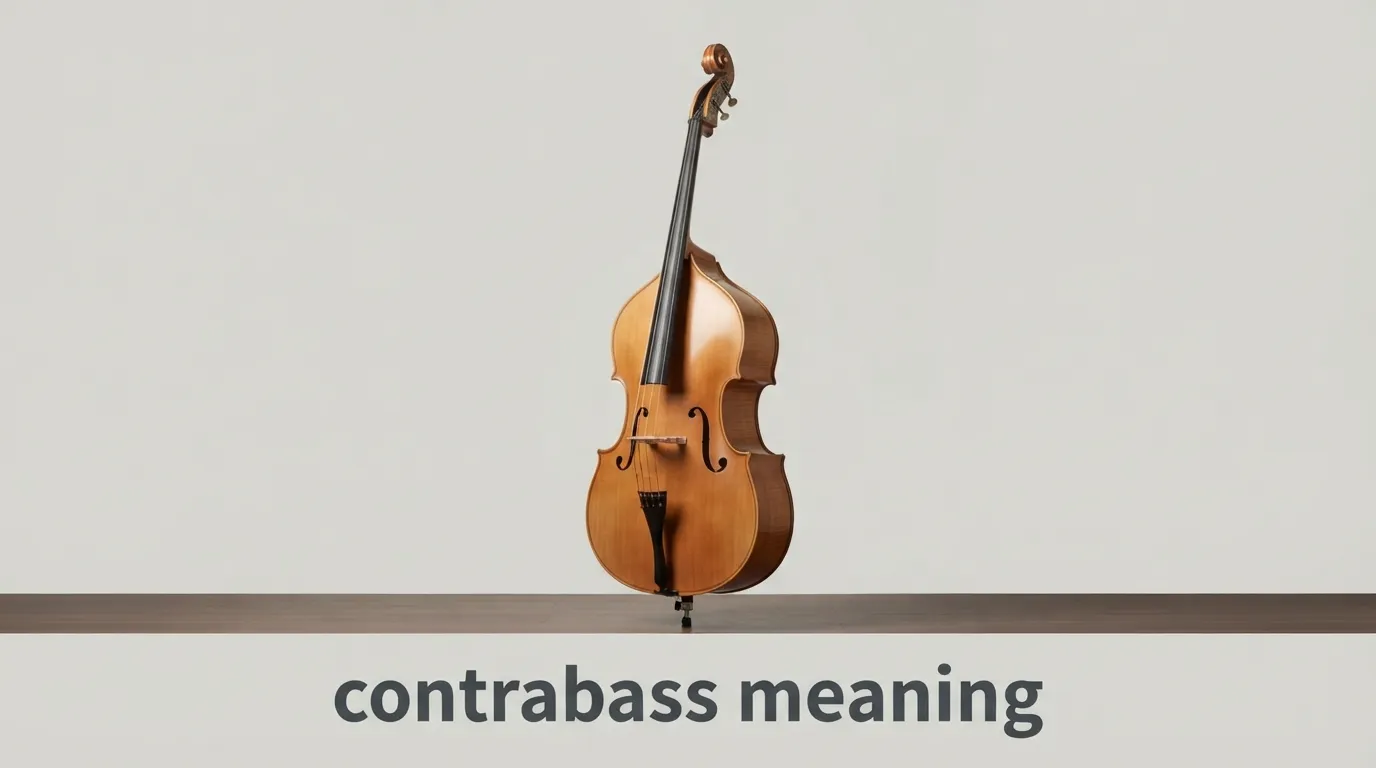
The double bass is also known as the contrabass in some music settings. It is the largest common string instrument in an orchestra.
You may also hear these names:
- Double bass
- Contrabass
- Upright bass
- String bass
In many cases, these names point to the same instrument.
The double bass has four strings and is played with a bow or by plucking the strings. It gives music a deep base.
But there is one key point to remember:
Contrabass does not always mean double bass.
The word can also be part of the name of other low instruments.
What Does a Contrabass Sound Like?
A contrabass instrument usually has a deep, dark, and low sound.
The sound can feel strong and full. It may help support other parts of a song or piece of music.
The exact sound depends on the instrument.
A contrabass clarinet has a dark woodwind sound. A contrabassoon has a deep reed sound. A double bass has a deep string sound.
They all sound different, but they share one main trait:
They can produce very low notes.
This low sound can help give music more depth.
Why Are Contrabass Instruments So Large?
Many low instruments are large because of the way sound is made.
For many instruments, a longer air path or larger body helps create lower notes. This is why a contrabass instrument is often much bigger than its smaller family members.
For example:
- A double bass is much larger than a violin.
- A contrabass clarinet is much larger than a normal clarinet.
- A contrabassoon is much larger than many other woodwind instruments.
The large size also changes how the instrument is held and played.
Still, size is not the only thing that controls pitch. The shape, design, air path, strings, and other parts of an instrument also matter.
Where Is Contrabass Used?
You can find the term in many music settings.
It may appear in an orchestra, concert band, music school, or instrument guide.
Here are three common places:
Orchestras:
Low instruments can support the music and add depth.
Concert bands:
Low woodwinds and other low instruments can help balance higher sounds.
Music books:
The word may be used to explain an instrument or its range.
You may also see it in the name of an instrument.
Contrabass in an Orchestra
An orchestra has many instruments. Each one has a role.
Some instruments play high notes. Others play middle notes. Some play very low notes.
Contrabass instruments can work in this low area.
For example, the double bass can support the lower part of the string section. A contrabassoon can add a very low woodwind sound.
These low sounds can help connect the other parts of the music.
A low part may not always carry the main tune. Instead, it may help build the sound under the melody.
Common Contrabass Instruments
There are many instruments that use the word “contrabass.”
Some are common in certain music groups, while others are less common.
Double bass:
A large string instrument with a deep sound. It is often called contrabass.
Contrabass clarinet:
A large clarinet that plays very low notes.
Contrabassoon:
A large woodwind instrument from the bassoon family.
Contrabass saxophone:
A very large saxophone with a low range.
The names may look alike, but the instruments work in different ways.
Contrabass Meaning in Simple Music Terms
If you are new to music, you do not need to learn a lot of music theory to understand this word.
Just remember this:
Contrabass describes the very low end of music.
It can tell you that an instrument:
- Plays very low notes
- Belongs to the low end of its family
- Adds depth to a musical group
For example, the word contrabass in “contrabass clarinet” tells you that this clarinet is made for a much lower range.
How Do You Pronounce Contrabass?
Contrabass is usually said like:
KON-truh-bass
The last part sounds like “bass” in music.
You may hear the word in phrases such as:
- Contrabass clarinet
- Contrabassoon
- Contrabass section
The pronunciation can sound a little different depending on the speaker’s accent, but the basic form stays the same.
Contrabass in a Sentence
Seeing the word in real sentences can make it easier to understand.
- The band used a contrabass clarinet to add a deep sound.
- The contrabassoon played a very low part in the piece.
- The composer wrote a new part for the contrabass section.
- The double bass is sometimes called the contrabass.
- This instrument has a contrabass range.
These examples show how the word can describe an instrument or a very low part of music.
Contrabass vs. Double Bass
The two terms can cause confusion.
Double bass is the name of a specific string instrument.
Contrabass is a wider term. It can refer to the double bass, but it can also describe other very low instruments.
Think of it this way:
Double bass = one specific instrument.
Contrabass = a term that can describe a very low instrument or range.
So, the two words can mean the same thing in some cases, but not in every case.
Is Contrabass a Common Word?
Contrabass is a real music term, but you may not hear it in daily speech.
People who are not musicians often say double bass when they mean the large string instrument.
Musicians may use “contrabass” when talking about instrument families, low ranges, or certain instrument names.
For example, a music teacher may say “contrabass clarinet,” while someone talking about an orchestra may simply say “double bass.”
The meaning becomes clear from the words around it.
Common Mistakes About Contrabass
One common mistake is thinking that contrabass is always the name of one instrument.
It is not.
The word can describe a very low range. It can also be part of an instrument’s name.
Another mistake is thinking that all contrabass instruments sound the same.
They do not.
A contrabassoon, contrabass clarinet, and double bass have different sounds because they use different ways to make music.
Their shared feature is their very low pitch.
Why Is Contrabass Important in Music?
Low sounds can help give music balance.
Imagine a song with only high sounds. It may feel thin or light. A low part can add weight and depth.
Contrabass instruments can help create that low layer.
They may:
- Support the melody
- Add depth
- Strengthen harmony
- Balance higher sounds
- Give a piece a fuller sound
The role can change from one piece of music to another.
FAQs
Contrabass meaning in english
Contrabass means the lowest-pitched member of any family of musical instruments, most commonly referring to the double bass.
Contrabass meaning slang
Contrabass has no widely recognized slang meaning and is used almost exclusively as a musical term.
Contrabass vs cello
The contrabass (double bass) is larger and lower-pitched than the cello, tuned in fourths rather than fifths, and usually played standing or on a high stool.
Contrabass pronunciation
Contrabass is pronounced KON-truh-bayss or kon-truh-BAYSS (IPA: /ˈkɒn.trəˌbeɪs/ or /ˌkɒn.trəˈbeɪs/).
Contrabass flute
A contrabass flute is a large, low-pitched flute that sounds two octaves below a standard concert flute.
Contrabass instrument
A contrabass instrument is any musical instrument pitched roughly an octave below the normal bass version of its family, most often the double bass.
Contrabass clarinet
A contrabass clarinet is a large woodwind instrument pitched two octaves below the B♭ clarinet, producing a deep and resonant tone.
Contrabass etymology
The word contrabass comes from Italian “contrabbasso,” formed from “contra-” (meaning against or below) and “basso” (bass or low).
Conclusion
Contrabass means very low in music. It can describe a low musical range or an instrument that can play very deep notes. The word may refer to a double bass, but it can also appear in names such as contrabass clarinet and contrabassoon.
The key idea is simple: contrabass points to the very low end of music. Once you know that, terms with “contrabass” become much easier to understand.

Hello, I’m Mark Nichol. I’ve always been passionate about English words and how they are used in everyday communication. At Defineexa.com, I share simple guides on word meanings, acronyms, texting abbreviations, and modern slang. I believe learning English should be easy, practical, and enjoyable, so every article is written with clarity and accuracy in mind.