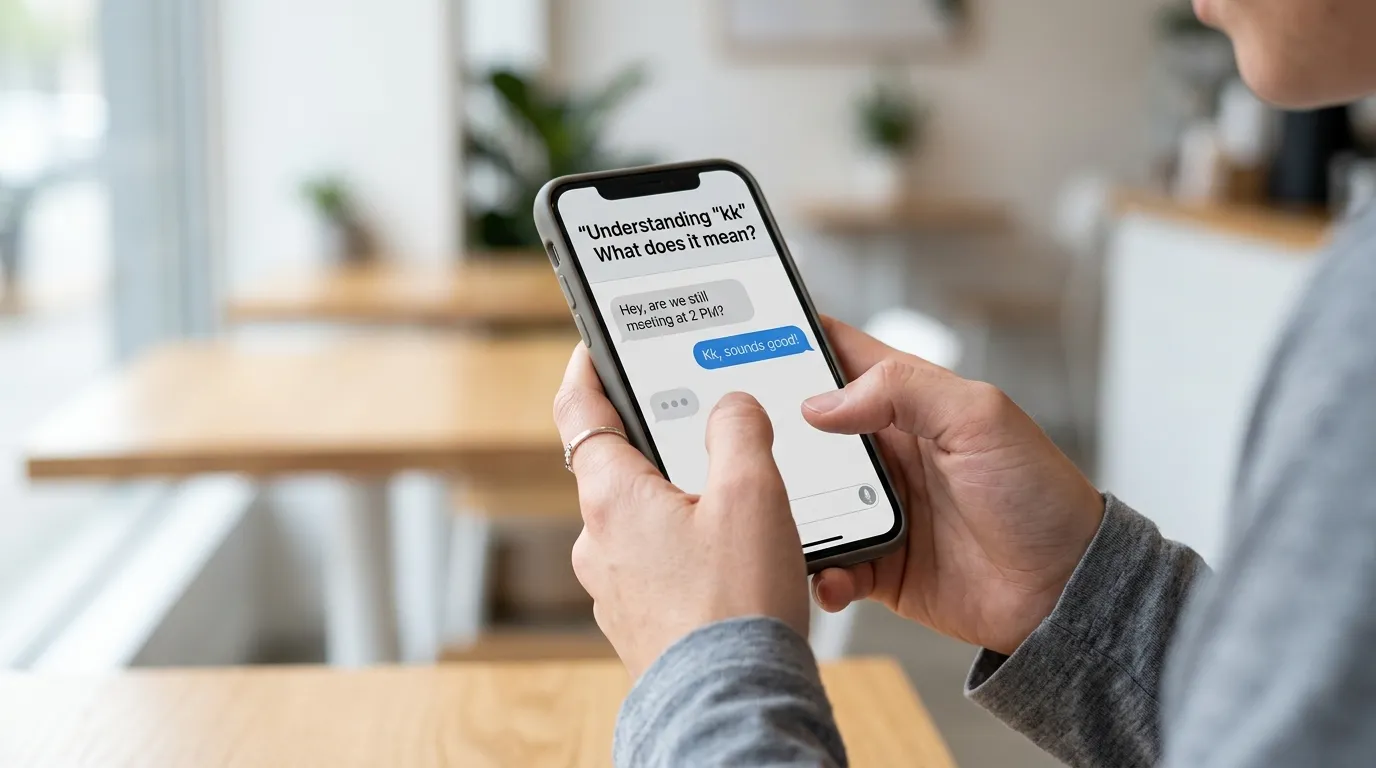
KK means okay or got it in texting and online chats. It is a quick, casual way to show you understood a message or agree with a plan.
People use it because it feels softer and friendlier than a single k.
You open your phone and see kk. No emoji. No extra words. Just those two letters. For a second you wonder if the other person is annoyed, busy, or just being short.
That tiny reply causes more confusion than it should. The truth is simple once you know the context.
KK is the digital version of a relaxed nod. It tells the other person the message received, I’m good with that.
It shows up in texts, Instagram DMs, Snapchat chats, Discord servers, gaming lobbies, and group messages every day. Most of the time it carries zero drama.
Why People Choose KK Over OK or K
Typing full words takes time. Early internet and online gaming made short replies popular. OK got shortened to k. Then many people started doubling it to kk. The extra letter softens the tone.
A single k can feel cold or dismissive. OK, stay neutral. KK lands in the friendly middle. It says the same thing without sounding abrupt. That small difference is why so many people prefer it in casual conversations.
Some sources link it to the older phrase k, kewl (okay, cool). Others simply see it as a reduplication of k for okay. Either way, the meaning has stayed steady for years. It is not a new trend that changes every month.
How KK Feels in Real Conversations
Tone depends on the relationship and the moment.
When a friend texts I’ll be there at 7, and you reply kk, it usually means sounds good, see you then. Add a thumbs-up or a smiling face and it feels warm. Alone, it still reads as calm acknowledgment for most people.
In a group chat making plans, kk keeps the conversation moving without forcing anyone to write a longer response. In gaming, it is pure efficiency: I’m heading left and get a fast kk so the team stays focused.
It can also close a conversation politely. After someone shares information and no more discussion is needed, kk works like a soft period. The chat ends without awkward silence or forced extra words.
Common Mistakes People Make With KK
The biggest mistake is reading too much into it. Many people assume a short reply must mean the sender is upset. That is rarely true. Most of the time the person is simply typing fast, multitasking, or matching the casual energy of the chat.
Another mistake is using it in the wrong setting. In a formal work email or a serious conversation with someone you barely know, kk can feel too casual. Switch to okay, got it, or understood instead.
Some people confuse kk with longer strings of k’s. In Brazilian Portuguese, kkkk or kkkkk often means laughter (like haha). In Korean texting, repeated ㅋ characters do the same. English kk almost never means laughing. Context and the number of letters matter.
A rarer secondary meaning is kiss kiss at the end of a message between close friends or partners. This use is far less common than the okay meaning and usually appears with other affectionate language.
KK Across Different Platforms
The core meaning stays the same, but the vibe shifts slightly by app.
On WhatsApp and iMessage it feels everyday and friendly among people who already know each other. On Snapchat it often ends with a quick exchange about streaks or plans. Instagram DMs use it the same way people use it in regular texts. Discord and gaming chats treat it as pure confirmation so the conversation can keep moving at speed.
| Platform | Typical Tone of KK | Common Use Example |
| Text / WhatsApp | Casual and friendly | Meet at 6? → kk |
| Snapchat | Quick and neutral | Streak later → kk |
| Instagram DM | Light acknowledgment | I’ll send the link → kk 👍 |
| Discord / Games | Fast confirmation | Push mid → kk |
| Work chat | Too informal for most teams | Better to use okay or got it |
This table shows why the same two letters can feel different depending on where they appear. The meaning does not change. The expected politeness level does.
Related Terms That People Mix Up
Several short replies sit in the same family as kk. Knowing the differences helps you pick the right one and read others accurately.
| Term | Usual Meaning | Tone Feeling | Best Used When |
| k | Okay | Can feel cold or annoyed | Only with people who know you well |
| kk | Okay / got it | Casual and soft | Everyday chats with friends |
| ok | Okay | Neutral | Most situations |
| okay | Okay | Clear and complete | When you want no doubt |
| cool | Sounds good | Positive and relaxed | Showing mild enthusiasm |
| bet | Sure / deal | Confident agreement | Plans or challenges |
| gotcha | I understand | Clear acknowledgment | After instructions or details |
KK sits comfortably between the abrupt k and the fully spelled okay. It is the version most people reach for when they want to stay friendly without writing a full sentence.
When KK Might Feel Off
Even a friendly term can land wrong. If someone just shared something emotional or serious and you reply with only kk, it can come across as dismissive. In those moments a longer reply shows more care.
If the conversation already feels tense, a short kk might be read as passive. Adding a few extra words or an emoji usually fixes the risk.
Age and culture also play a role. Younger texters often treat kk as completely normal. Some older users still prefer ok or okay and may find the double k a bit too slangy. Neither side is wrong. Matching the other person’s style usually works best.
Real Examples of KK in Action
Here are everyday situations so you can see the pattern:
Friend: Can you grab milk on the way home?
You: kk
Coworker (casual Slack): Meeting moved to 3.
You: kk, thanks
Gamer: I’ll cover the left side.
You: kk
Partner: I’m running 10 minutes late.
You: kk, no rush
In each case the reply keeps things light and confirms the information without adding extra chatter.
Why This Tiny Reply Keeps Surviving
Language online rewards speed and clarity. KK delivers both. It is easy to type on any keyboard, works across devices, and rarely needs explanation among people who text regularly. Newer slang comes and goes, but simple acknowledgments like this one stay useful.
It also fills a real social need. Not every message requires a full response. Sometimes the polite thing is simply to show you saw it and you are fine with it. KK does that job cleanly.
FAQs
Q: What does kk mean from a girl?
A: From a girl, “kk” usually means okay or alright in a casual way.
Q: What does kk mean in texting?
A: In texting, “kk” is a short way to say okay, often showing quick agreement or acknowledgment.
Q: What does kk mean in school?
A: In school-related texting, “kk” usually means okay or got it.
Q: What does kk mean from a guy?
A: From a guy, “kk” usually means okay and is commonly used as a quick, casual reply.
Q: What does kk mean on Snapchat?
A: On Snapchat, “kk” usually means okay or alright in a brief message.
Q: K or kk meaning?
A: “K” and “kk” both usually mean okay, but “kk” can sound slightly friendlier or less blunt.
Q: What does kk mean in gaming?
A: In gaming, “kk” commonly means okay, showing agreement or that the player understands.
Q: What does kk mean christmas?
A: In a Christmas-related context, “kk” usually still means okay, unless the conversation gives it another meaning.
Conclusion
KK is one of the most practical pieces of internet shorthand. It means okay, got it, or message understood. It is softer than a lone k, faster than typing okay, and friendly enough for almost any casual chat. Once you stop overthinking the length, the meaning becomes obvious. Use it when you want a quick, low-pressure confirmation. Skip it when the moment calls for more warmth or formality. That simple rule covers nearly every situation you will meet.

Hello, I’m Mark Nichol. I’ve always been passionate about English words and how they are used in everyday communication. At Defineexa.com, I share simple guides on word meanings, acronyms, texting abbreviations, and modern slang. I believe learning English should be easy, practical, and enjoyable, so every article is written with clarity and accuracy in mind.