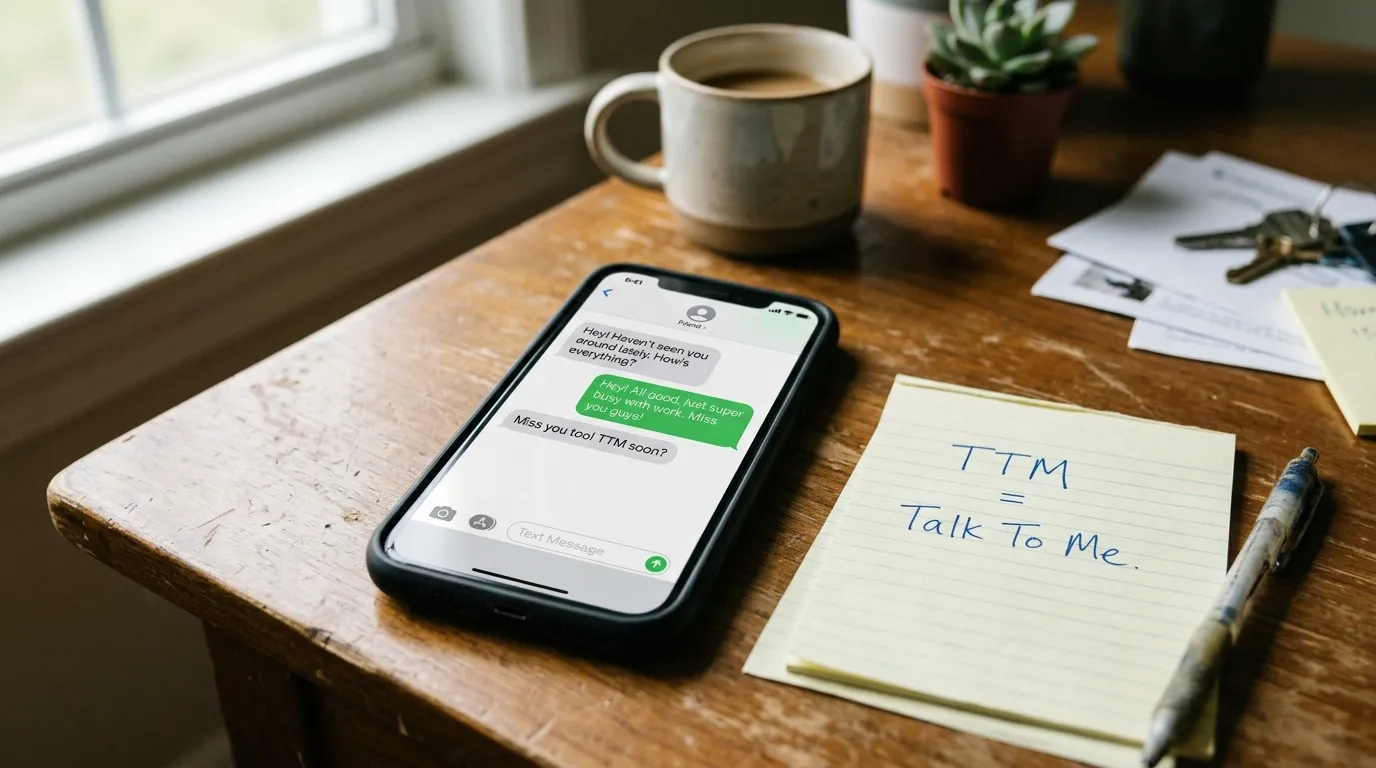
TTM means Talk To Me. In texts, DMs, Snapchat, Instagram, TikTok, and most casual chats, someone sending TTM is inviting you to reply, start a conversation, or keep talking.
That’s the short answer most people need when they first see the letters.
The rest of this guide walks through exactly how it works in real messages, where the tone can shift, what other rare meanings exist, and how to reply without awkwardness.
Why People Use TTM Instead of Writing the Full Phrase
Texting rewards speed. Typing to talk to me takes more taps than three letters. TTM delivers the same invitation in a lighter package. It feels friendly rather than demanding, which is why it shows up so often when someone is bored, checking in, or hoping the chat continues.
You might get it after a quiet stretch: Hey, been a minute. TTM.
Or when someone wants details: Saw your storyTTM about that trip!
Or simply because they feel like chatting: Nothing going on tonight. TTM.
The phrase itself is old, but the three-letter version settled into everyday digital talk years ago and stayed. It works across almost every messaging app because the meaning is easy to guess from context.
How TTM Shows Up on Different Platforms
On Snapchat the term feels especially natural. People drop TTM in chats, story replies, or even as a quick snap caption when they want the other person to open a conversation. Streaks and disappearing messages make short prompts useful, so TTM fits the app’s pace.
Instagram users lean on it in DMs and story replies. A simple TTM under a story can mean I’m interested, tell me more without sounding too formal. Captions sometimes end with it when the poster wants engagement: Big news laterTTM if you want the details.
TikTok comments and captions use the same invitation. Creators might write TTM if you relate to pull viewers into the comments or DMs. Discord and regular texting follow the same patternanyone wanting a reply can send it.
Across all these places the core idea stays the same: the sender is open and wants conversation.
Tone Can Change Everything
Context and relationship decide whether TTM feels casual, caring, or a little flirty.
With a close friend it often just means I’m free, let’s catch up.
When someone has been quiet or seems down, it can sound supportive: You okay? TTM whenever.
On a dating app or with a crush, adding an emoji or pairing it with a compliment can tip it toward interest: TTM 😊 or Missed chattingTTM.
The words themselves stay neutral. The extra signals around them do the emotional work. Reading the whole message and the history between you two is the best way to catch the right vibe.
Real Examples of TTM in Everyday Chats
Here are natural ways the term appears:
- Bored at home. TTM.
- Haven’t heard from you in ages. TTM when you’re free.
- That party looked wild. TTM about it!
- Feeling off today. TTM if you need to vent.
- Just got some news. TTM later?
In each case the sender is opening the door. You can walk through it or gently close itthere is usually no pressure.
How to Reply When Someone Sends TTM
A simple, matching tone works best. If you want to chat, just start talking about something light or ask a question back.
Hey! What’s up?
Sure, just finished work. How’s your day going?
Haha okay, TTM about what?
If you’re busy, a short honest reply keeps things clear: In the middle of something but I’ll message later or Can’t talk right now, catch up tomorrow?
Ignoring it completely is fine if the relationship is casual, but a quick acknowledgment feels friendlier.
Common Mistakes People Make with TTM
One frequent mix-up is treating every TTM as urgent. Most of the time it is casual, not a demand for an instant deep conversation.
Another is using it in the wrong setting. Dropping TTM into a work email or formal group chat usually feels out of place. Save it for friends, casual DMs, and social apps.
Some people also confuse it with similar-looking abbreviations. TTML means talk to me later, TTMN can mean talk to me now, and DTTM means don’t talk to me. Reading the extra letter or the surrounding message prevents those mix-ups.
Finally, overusing it can make the invitation feel less special. One well-timed TTM lands better than sending it every hour.
Other Meanings of TTM Outside Texting
While Talk To Me dominates casual messages, the same three letters appear in a few specialized fields.
| Context | Meaning | How Common in Everyday Chat |
| Texting / Social Media | Talk To Me | Extremely common |
| Finance / Investing | Trailing Twelve Months | Rare outside work |
| Business / Product | Time To Market | Rare outside work |
| Collectibles | Through The Mail | Niche (autographs, cards) |
Trailing Twelve Months is a standard finance term. Analysts use TTM numbers to look at a company’s performance over the most recent full year rather than a single quarter. Time To Market describes how long it takes a product to go from idea to sale. Through The Mail shows up among collectors who send items for signatures or trades by post.
None of these appear in normal Snapchat or Instagram chats. If the conversation is about stocks, product launches, or trading cards, the other meaning might apply. Otherwise assume Talk To Me.
Related Slang That Sits Near TTM
A few other short forms live in the same neighborhood:
| Term | Full Meaning | Difference from TTM |
| HMU | Hit Me Up | Slightly broader invitation to contact |
| TTYL | Talk To You Later | Ends a chat instead of starting one |
| LMK | Let Me Know | Asks for information rather than open talk |
| WYD | What You Doing | Checks current activity |
| DTTM | Don’t Talk To Me | Opposite request |
HMU is the closest cousinboth invite contactbut HMU can cover calls, plans, or just a message. TTM focuses more tightly on conversation itself.
When TTM Feels Especially Useful
The term shines in a few everyday situations. After a long gap in chatting it softens the re-entry. When someone posts something interesting but doesn’t give many details, TTM is a low-pressure way to ask for more. On quiet evenings it simply signals availability without a long explanation.
It also works as gentle support. A friend going through a rough patch might appreciate TTM if you want more than a long paragraph of advice. The short form leaves the choice in their hands.
A Few Tips for Using TTM Yourself
Keep the surrounding message clear. TTM alone can work with close friends who already know your style, but adding a little context helps everyone else: Free laterTTM about weekend plans.
Match the energy of the chat. Playful emojis or extra words can warm it up; a plain TTM stays neutral.
And remember the audience. Younger users and heavy social-media users recognize it instantly. Older relatives or colleagues might need the full phrase.
FAQs
Q: TTM meaning on Instagram
A: On Instagram, TTM usually means “Talk To Me,” inviting someone to start a conversation.
Q: TTM meaning disorder
A: In a disorder-related context, TTM can refer to Trichotillomania, a condition involving repeated hair pulling.
Q: TTM Meaning slang
A: In slang, TTM commonly means “Talk To Me,” especially in texts and social media.
Q: Ttm meaning text From a girl
A: From a girl, TTM usually means “Talk To Me,” showing that she wants you to communicate with her.
Q: Ttm meaning in stock market
A: In the stock market, TTM means “Trailing Twelve Months,” covering a company’s most recent 12 months of financial data.
Q: TTM meaning in banking
A: In banking and finance, TTM can mean “Trailing Twelve Months,” a period used to review recent financial performance.
Q: Ttm meaning tiktok
A: On TikTok, TTM commonly means “Talk To Me,” often used in captions, comments, or messages.
Q: TTM meaning yahoo finance
A: On Yahoo Finance, TTM means “Trailing Twelve Months,” referring to financial results from the latest 12-month period.
Conclusion
TTM meaning stays simple at its core: someone wants to talk. Once you recognize the invitation, the rest of the conversation is yours to shape. Whether you jump in with a long reply or send a quick later, the three letters have already done their job of opening the door.

Hi, I’m Benjamin Dreyer. I enjoy exploring the English language and making difficult words simple to understand. At Defineexa.com, I write about word meanings, text abbreviations, acronyms, and internet slang. My goal is to give readers clear, accurate, and easy-to-read explanations that help them learn something new and use English with greater confidence every day.